

F.K. Waechter, F.K. Waechter (Ill.)
Christian Schünemann
Otto A. Böhmer
Tomi Ungerer, Tomi Ungerer (Ill.)
Doris Dörrie
Martin Suter
Alfred A. Häsler
Walter Nigg
Urs Widmer
Walter Nigg
Sibylle Mulot
Urs Widmer
Maria Elisabeth Straub
Anne Diekmann (Hg.), Willi Gohl (Hg.), Tomi Ungerer (Ill.)
Tatjana Hauptmann, Christian Strich (Hg.), Tatjana Hauptmann (Ill.)
Johannes Carstensen, Tatjana Hauptmann
Hartmut Lange
Sibylle Mulot
Tomi Ungerer, Tomi Ungerer (Ill.)
Slawomir Mrozek, Chaval (Ill.)
Friedrich Dürrenmatt
Walter Nigg
Hansjörg Schneider
Urs Widmer
Bernd Eichinger (Hg.)
Hans Werner Kettenbach
Hartmut Lange
Tomi Ungerer, Tomi Ungerer (Ill.)
Friedrich Dürrenmatt
Hansjörg Schneider
Bernhard Schlink
Hans Werner Kettenbach
John Vermeulen
Leon de Winter
Tomi Ungerer, Tomi Ungerer (Ill.)
Leon de Winter
John Vermeulen
Donna Leon
Donna Leon
Donna Leon
Magdalen Nabb
Magdalen Nabb
Magdalen Nabb
Anthony McCarten
Magdalen Nabb
Patricia Highsmith, Paul Ingendaay (Hg.)
Ludwig Marcuse
Hartmut Lange
F.K. Waechter, F.K. Waechter (Ill.)
Friedrich Dürrenmatt
Urs Widmer
Christian Schünemann
Hugo Loetscher
Slawomir Mrozek
Friedrich Dönhoff
Christian Schünemann
F.K. Waechter, F.K. Waechter (Ill.)
Urs Widmer
Ingrid Noll
Luis Murschetz
Jakob Arjouni
Friedrich Dürrenmatt
Tatjana Hauptmann, Theodor Storm, Tatjana Hauptmann (Ill.)
F.K. Waechter, F.K. Waechter (Ill.)
Martin Suter
Lukas Hartmann
Martin Suter
Tilman Spreckelsen
Doris Dörrie
Luis Murschetz
Friedrich Dürrenmatt
Friedrich Dürrenmatt, Peter Rüedi, Urs Widmer
Slawomir Mrozek
Viktorija Tokarjewa
Hugo Loetscher
Friedrich Dürrenmatt
F.K. Waechter, F.K. Waechter (Ill.)
Christoph Poschenrieder
Friedrich Dürrenmatt
Walter Nigg
Martin Suter
Hartmut Lange
Friedrich Dürrenmatt
Bernhard Schlink
Hartmut Lange
Hugo Loetscher
Viktorija Tokarjewa
Tomi Ungerer, Tomi Ungerer (Ill.)
Ingrid Noll
Hugo Loetscher
Hartmut Lange
Tomi Ungerer
Viktorija Tokarjewa
Martin Suter
Friedrich Dürrenmatt
Sibylle Mulot
Hugo Loetscher
Friedrich Dürrenmatt
Slawomir Mrozek
F.K. Waechter, F.K. Waechter (Ill.)
Jean-Jacques Sempé, Patrick Süskind
Slawomir Mrozek
Bernhard Schlink
Ingrid Noll
Bernhard Schlink
Erich Hackl
Tomi Ungerer, Tomi Ungerer (Ill.)
Alfred Andersch
Alfred Andersch
Hans Werner Kettenbach
Hugo Loetscher
Friedrich Dürrenmatt
Bernd Eilert, F.K. Waechter, F.K. Waechter (Ill.)
F.K. Waechter
Friedrich Dürrenmatt
F.K. Waechter
Alfred Andersch
Hans Werner Kettenbach
Tatjana Hauptmann, Urs Widmer, Tatjana Hauptmann (Ill.)
F.K. Waechter, F.K. Waechter (Ill.)
Ingrid Noll
Lukas Hartmann
Christian Schünemann
Walter Heinrich
Patrick Süskind
Luis Murschetz
Sibylle Mulot
Sibylle Mulot
Tatjana Hauptmann, Franz Kafka, Tatjana Hauptmann (Ill.)
Christoph Poschenrieder
Friedrich Dürrenmatt
Martin Suter
Walter Muschg, Julian Schütt (Hg.), Winfried Stephan (Hg.)
Uwe Timm, Tatjana Hauptmann (Ill.)
Paul Flora, Paul Flora (Ill.)
Erich Hackl
Andrej Kurkow
Donna Leon
Donna Leon
Patrick Süskind
Donna Leon
Peter Rüedi
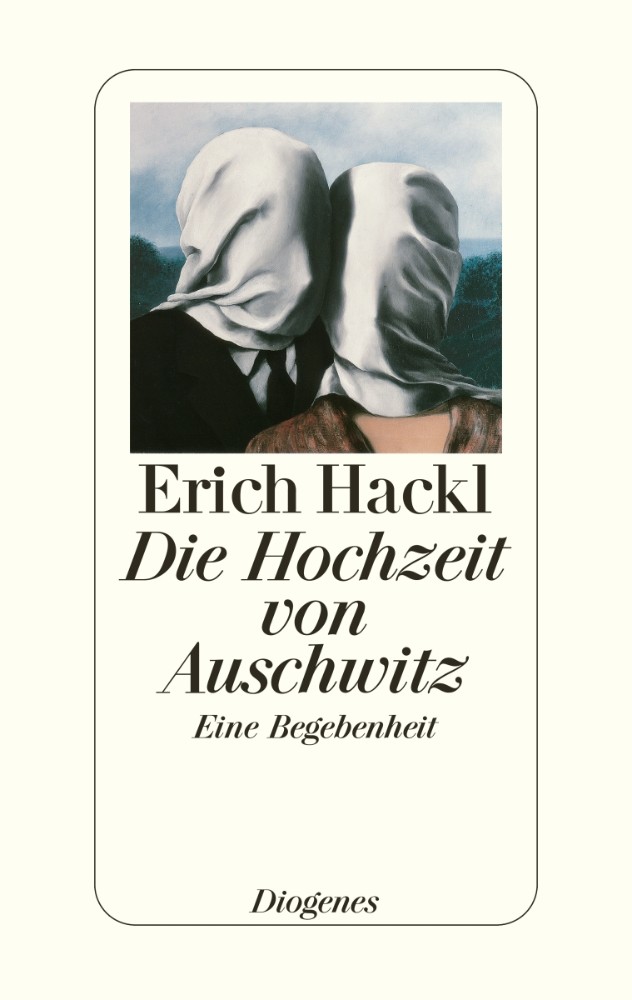
The story of the Austrian Rudi Friemel and the Spaniard Marga Ferrer who met during the Spanish Civil War, who were repeatedly separated by events and who were finally able to legalise their union under the most impossible conditions: Rudi has been a prisoner in the Auschwitz concentration camp since 1942, and in 1944 Marga is able to visit him for one day in the death camp in order to marry him. A glimmer of hope or a cruel piece of cynicism on the part of the dictators? In any case, an incredible occurrence that means a lot not only to the bride and groom. It is to have its consequence for Auschwitz. A moving book about hope and despair, the defeats of half a century. A book in which the emphasis is on both love and trust – to the limits of human endurance.
»›The Wedding in Auschwitz‹ tells an extraordinary true story, but it is the manner of its telling that makes it such an exceptional book. Hackl has given himself entirely to the subject, and embedded his own art within the record.«Times Literary Supplement
»This is a sophisticated, exhausting, provocative book. Hackl’s dauntingly forensic flair has again proven how well he interprets known facts and then thoughtfully places them within the arena of behaviour.«The Irish Times
»Hackl never showed us a perfect world in his books. One only has to remember his best-known books ›Farewell to Sidonia‹, the story of a gipsy girl kidnapped from loving foster parents by Nazis and brought to Auschwitz, where she died. But his book ›Wedding at Auschwitz‹ is the toughest subject he has given his readers to date, and probably his most ambitious project as a writer so far.«Die Welt
»Hackl's novel is a puzzle of different voices: survivors of Auschwitz, veterans of the Spanish Civil War, policemen, anonymous voices, documents and letters, but also the voices of Norbert, Rudi's son from his first marriage, Marga's sister Marina, their common son, friends and relatives. The fragments are woven to a fabric that convincingly tells the story of a great love during times of war. ›Wedding at Auschwitz‹ is a complex and demanding book, and it is probably Hackl's darkest and saddest work to date.«Berliner Zeitung
»Again one of these stories one hardly belives to be possible, and which, it seems, only Erich Hackl manages to unearth, who treads the fine line between literature and literary-historical journalism (...) A strange little book, shocking and moving, yet tender and kind at the same time.«Frankfurter Allgemeine Zeitung
»This quietly moving book demonstrates once again why Erich Hackl is unique. It is not due to, as he is often patronisingly reproached, a leftwing nostalgia towards the era of the Spanish Civil War and the antifascist movement, but his respect for suffering individuals who cling to their choice of saying 'no' even - or because - they get drawn into a maelstrom of violence.«Literaturen