

F.K. Waechter, F.K. Waechter (Ill.)
Christian Schünemann
Otto A. Böhmer
Tomi Ungerer, Tomi Ungerer (Ill.)
Doris Dörrie
Martin Suter
Alfred A. Häsler
Walter Nigg
Urs Widmer
Walter Nigg
Sibylle Mulot
Urs Widmer
Maria Elisabeth Straub
Anne Diekmann (Hg.), Willi Gohl (Hg.), Tomi Ungerer (Ill.)
Tatjana Hauptmann, Christian Strich (Hg.), Tatjana Hauptmann (Ill.)
Johannes Carstensen, Tatjana Hauptmann
Hartmut Lange
Sibylle Mulot
Tomi Ungerer, Tomi Ungerer (Ill.)
Slawomir Mrozek, Chaval (Ill.)
Friedrich Dürrenmatt
Walter Nigg
Hansjörg Schneider
Urs Widmer
Bernd Eichinger (Hg.)
Hans Werner Kettenbach
Hartmut Lange
Tomi Ungerer, Tomi Ungerer (Ill.)
Friedrich Dürrenmatt
Hansjörg Schneider
Bernhard Schlink
Hans Werner Kettenbach
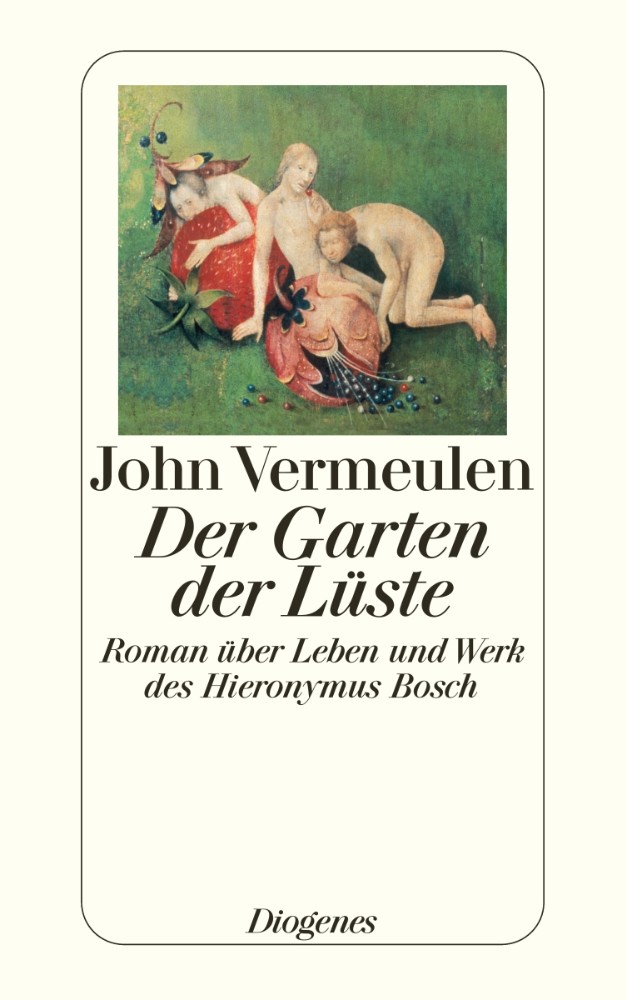
John Vermeulen
Leon de Winter
Tomi Ungerer, Tomi Ungerer (Ill.)
Leon de Winter
John Vermeulen
Donna Leon
Donna Leon
Donna Leon
Magdalen Nabb
Magdalen Nabb
Magdalen Nabb
Anthony McCarten
Magdalen Nabb
Patricia Highsmith, Paul Ingendaay (Hg.)
Ludwig Marcuse
Hartmut Lange
F.K. Waechter, F.K. Waechter (Ill.)
Friedrich Dürrenmatt
Urs Widmer
Christian Schünemann
Hugo Loetscher
Slawomir Mrozek
Friedrich Dönhoff
Christian Schünemann
F.K. Waechter, F.K. Waechter (Ill.)
Urs Widmer
Ingrid Noll
Luis Murschetz
Jakob Arjouni
Friedrich Dürrenmatt
Tatjana Hauptmann, Theodor Storm, Tatjana Hauptmann (Ill.)
F.K. Waechter, F.K. Waechter (Ill.)
Martin Suter
Lukas Hartmann
Martin Suter
Tilman Spreckelsen
Doris Dörrie
Luis Murschetz
Friedrich Dürrenmatt
Friedrich Dürrenmatt, Peter Rüedi, Urs Widmer
Slawomir Mrozek
Viktorija Tokarjewa
Hugo Loetscher
Friedrich Dürrenmatt
F.K. Waechter, F.K. Waechter (Ill.)
Christoph Poschenrieder
Friedrich Dürrenmatt
Walter Nigg
Martin Suter
Hartmut Lange
Friedrich Dürrenmatt
Bernhard Schlink
Hartmut Lange
Hugo Loetscher
Viktorija Tokarjewa
Tomi Ungerer, Tomi Ungerer (Ill.)
Ingrid Noll
Hugo Loetscher
Hartmut Lange
Tomi Ungerer
Viktorija Tokarjewa
Martin Suter
Friedrich Dürrenmatt
Sibylle Mulot
Hugo Loetscher
Friedrich Dürrenmatt
Slawomir Mrozek
F.K. Waechter, F.K. Waechter (Ill.)
Jean-Jacques Sempé, Patrick Süskind
Slawomir Mrozek
Bernhard Schlink
Ingrid Noll
Bernhard Schlink
Erich Hackl
Tomi Ungerer, Tomi Ungerer (Ill.)
Alfred Andersch
Alfred Andersch
Hans Werner Kettenbach
Hugo Loetscher
Friedrich Dürrenmatt
Bernd Eilert, F.K. Waechter, F.K. Waechter (Ill.)
F.K. Waechter
Friedrich Dürrenmatt
F.K. Waechter
Alfred Andersch
Hans Werner Kettenbach
Tatjana Hauptmann, Urs Widmer, Tatjana Hauptmann (Ill.)
F.K. Waechter, F.K. Waechter (Ill.)
Ingrid Noll
Lukas Hartmann
Christian Schünemann
Walter Heinrich
Patrick Süskind
Luis Murschetz
Sibylle Mulot
Sibylle Mulot
Tatjana Hauptmann, Franz Kafka, Tatjana Hauptmann (Ill.)
Christoph Poschenrieder
Friedrich Dürrenmatt
Martin Suter
Walter Muschg, Julian Schütt (Hg.), Winfried Stephan (Hg.)
Uwe Timm, Tatjana Hauptmann (Ill.)
Paul Flora, Paul Flora (Ill.)
Erich Hackl
Andrej Kurkow
Donna Leon
Donna Leon
Patrick Süskind
Donna Leon
Peter Rüedi
The young Jeroen van Aken – who, as a master, would dub himself Hieronymus Bosch – grew up in an era characterised by its fear of witches and devils and in which the fate of those suspected by the Church was to be burnt at the stake. He was connected by a profound – and, in the eyes of society, indecent – love to his older Sister Herberta, who introduced him to the subtleties and techniques of painting. Bosch befriended alchemists, philosophers and freethinkers, through whom he learned of the existence of ‘Ecco Homo’, the secret brotherhood of the free spirit, which would later provide the inspiration for his masterpiece, ›The Garden of Earthly Delight‹. However, the underlying ridicule of the Church and the authorities evident in his work proved to be a thorn in the side for many, and for one person in particular: the inquisitor and fanatic Jakob Sprenger, the »devil in a monk’s habit«. Aleyt van der Meervenne, Bosch’s cultured and powerful wife, was forced to bring all of her influence to bear to protect his life. Based on little-known facts and a wealth of supposition, John Vermeulen brings this extraordinary artist back to life. His intention is not to solve the riddles presented by the artist’s oeuvre, but to let himself be guided by its influence on his imagination. The result is a compact, riveting and sensuous novel with refined dialogue and scene-changes worthy of a film – and, of course, the wonderful art descriptions that vividly recreate Bosch’s work before the reader’s eyes.
»There is a certain kind of book in which people always seems to have their nose buried; and then, turning to you with a fervent look in their eyes, they exclaim, ‘You just HAVE to read this!’ ›The Garden of Earthly Delight‹ is such a book.«Norddeutscher Rundfunk
»A remarkable fictional biography. Based on the limited available facts and a wealth of supposition, a complete picture of the man, his work and his times emerges, a novel with a riveting plot, down-to-earth, graphic and yet extremely sensitive, adorned with magnificent and accessible descriptions of Bosch’s art.«Kölnische Rundschau