

F.K. Waechter, F.K. Waechter (Ill.)
Christian Schünemann
Otto A. Böhmer
Tomi Ungerer, Tomi Ungerer (Ill.)
Doris Dörrie
Martin Suter
Alfred A. Häsler
Walter Nigg
Urs Widmer
Walter Nigg
Sibylle Mulot
Urs Widmer
Maria Elisabeth Straub
Anne Diekmann (Hg.), Willi Gohl (Hg.), Tomi Ungerer (Ill.)
Tatjana Hauptmann, Christian Strich (Hg.), Tatjana Hauptmann (Ill.)
Johannes Carstensen, Tatjana Hauptmann
Hartmut Lange
Sibylle Mulot
Tomi Ungerer, Tomi Ungerer (Ill.)
Slawomir Mrozek, Chaval (Ill.)
Friedrich Dürrenmatt
Walter Nigg
Hansjörg Schneider
Urs Widmer
Bernd Eichinger (Hg.)
Hans Werner Kettenbach
Hartmut Lange
Tomi Ungerer, Tomi Ungerer (Ill.)
Friedrich Dürrenmatt
Hansjörg Schneider
Bernhard Schlink
Hans Werner Kettenbach
John Vermeulen
Leon de Winter
Tomi Ungerer, Tomi Ungerer (Ill.)
Leon de Winter
John Vermeulen
Donna Leon
Donna Leon
Donna Leon
Magdalen Nabb
Magdalen Nabb
Magdalen Nabb
Anthony McCarten
Magdalen Nabb
Patricia Highsmith, Paul Ingendaay (Hg.)
Ludwig Marcuse
Hartmut Lange
F.K. Waechter, F.K. Waechter (Ill.)
Friedrich Dürrenmatt
Urs Widmer
Christian Schünemann
Hugo Loetscher
Slawomir Mrozek
Friedrich Dönhoff
Christian Schünemann
F.K. Waechter, F.K. Waechter (Ill.)
Urs Widmer
Ingrid Noll
Luis Murschetz
Jakob Arjouni
Friedrich Dürrenmatt
Tatjana Hauptmann, Theodor Storm, Tatjana Hauptmann (Ill.)
F.K. Waechter, F.K. Waechter (Ill.)
Martin Suter
Lukas Hartmann
Martin Suter
Tilman Spreckelsen
Doris Dörrie
Luis Murschetz
Friedrich Dürrenmatt
Friedrich Dürrenmatt, Peter Rüedi, Urs Widmer
Slawomir Mrozek
Viktorija Tokarjewa
Hugo Loetscher
Friedrich Dürrenmatt
F.K. Waechter, F.K. Waechter (Ill.)
Christoph Poschenrieder
Friedrich Dürrenmatt
Walter Nigg
Martin Suter
Hartmut Lange
Friedrich Dürrenmatt
Bernhard Schlink
Hartmut Lange
Hugo Loetscher
Viktorija Tokarjewa
Tomi Ungerer, Tomi Ungerer (Ill.)
Ingrid Noll
Hugo Loetscher
Hartmut Lange
Tomi Ungerer
Viktorija Tokarjewa
Martin Suter
Friedrich Dürrenmatt
Sibylle Mulot
Hugo Loetscher
Friedrich Dürrenmatt
Slawomir Mrozek
F.K. Waechter, F.K. Waechter (Ill.)
Jean-Jacques Sempé, Patrick Süskind
Slawomir Mrozek
Bernhard Schlink
Ingrid Noll
Bernhard Schlink
Erich Hackl
Tomi Ungerer, Tomi Ungerer (Ill.)
Alfred Andersch
Alfred Andersch
Hans Werner Kettenbach
Hugo Loetscher
Friedrich Dürrenmatt
Bernd Eilert, F.K. Waechter, F.K. Waechter (Ill.)
F.K. Waechter
Friedrich Dürrenmatt
F.K. Waechter
Alfred Andersch
Hans Werner Kettenbach
Tatjana Hauptmann, Urs Widmer, Tatjana Hauptmann (Ill.)
F.K. Waechter, F.K. Waechter (Ill.)
Ingrid Noll
Lukas Hartmann
Christian Schünemann
Walter Heinrich
Patrick Süskind
Luis Murschetz
Sibylle Mulot
Sibylle Mulot
Tatjana Hauptmann, Franz Kafka, Tatjana Hauptmann (Ill.)
Christoph Poschenrieder
Friedrich Dürrenmatt
Martin Suter
Walter Muschg, Julian Schütt (Hg.), Winfried Stephan (Hg.)
Uwe Timm, Tatjana Hauptmann (Ill.)
Paul Flora, Paul Flora (Ill.)
Erich Hackl
Andrej Kurkow
Donna Leon
Donna Leon
Patrick Süskind
Donna Leon
Peter Rüedi
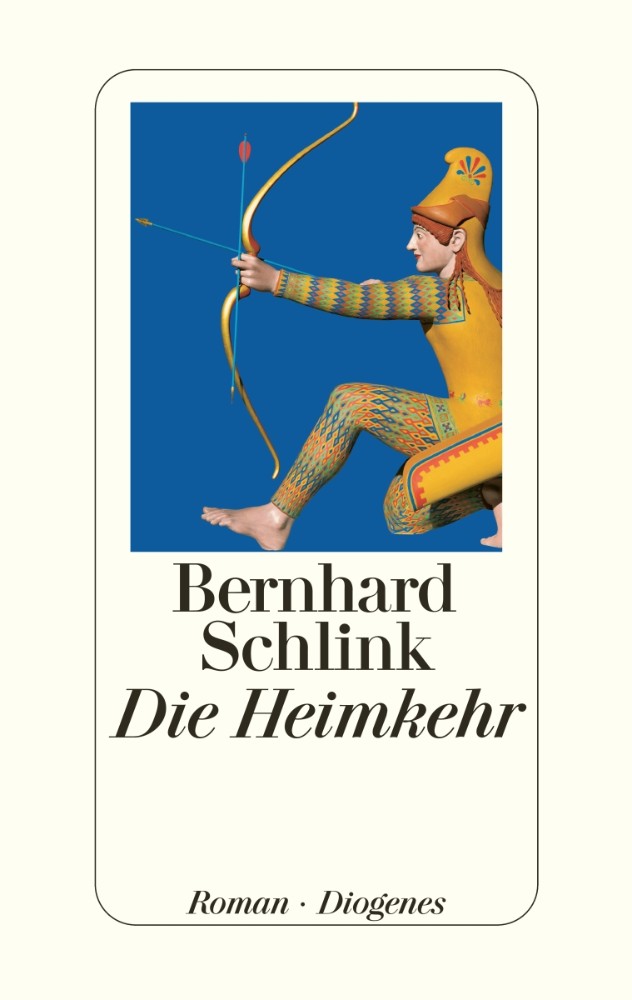
As a child, Peter Debauer, the narrator of the novel, spends his holidays at his grandparents’ house in Switzerland. In the evening, he sits with them at the table and reads, while they edit and correct the magazine novels with which they earn their money. Since paper is very expensive in the 1950s, his grandparents let him use the back of the edited manuscripts to scribble on, but tell him never to turn them over and read the text. One day, he simply cannot resist and turns the page - and reads about the odyssey of a German soldier to Siberia, his eventual return and subsequent search for his wife. Finally the soldier locates the city and the house in which she lives, but when his wife opens the door, another man is standing beside her, while she is holding his child on her arm. Then the soldier... But Peter Debauer cannot find out what happens next. He has already thrown away the original manuscripts – on which he has scribbled and drawn – which contained the end of the novel. Years later he recalls the story and wants to know how it ends. The search for the end of the story turns into the search for its author – a man who has repeatedly been able to hide his tracks, who has assumed a number of different identities, pursued various careers and who has developed a rather peculiar relationship to the horrors of the twentieth century. During his search, Peter Debauer encounters himself. In his attempt to discover the end of the soldier’s story, he embarks on his own odyssey: the search for his origins and his return, and for the woman he loves. Published in: France (Gallimard) Spain (Anagrama, Ed. 62 and Galaxia) Italy (Garzanti) Netherlands (Cossee) Norway (Gyldendal Norsk) Finland (Söderström) Portugal (Asa) Czech Republic (Prostor) Poland (Bertelsmann Media) Greece (Kritiki) Turkey (Dogan) Israel (Kinneret-Zmora-Dvir) Latvia (AGB) Lithuania (Versus Aureus) Slovakia (Slovart) Slovenia (Cankarjeva Zalozba) Romania (Polirom) Macedonia (Ili-Ili) Croatia (Algoritam) Hungary (Ulpius-Haz) Serbia (Plato) Russia (Azbooka) Japan (Shinchosha) China (Shanghai 99 Reader's Culture) Taiwan (Crown) Brazil (Record) Korea (Sigongsa)
»›Homecoming‹ is a powerful meditation on justice, history and the nature of evil. Schlink has written another lean, meticulously structured, disquieting thought-provoker.«Los Angeles Times
»Beguiling ... Despite its intricate, meze-like progression, ›Homecoming‹ has surprising narrative thrust.«The Economist
»Sensitive and disturbing ... The reader’s mind opens to the story like a plant unfurling its leaves to the sun.«The New York Times Book Review
»Schlink has put together a clever package and skilfully guides the reader through modern German history.«The Sunday Telegraph
»Once again Schlink has brought together the two parts of his professional life: ethicist and crime writer. ›The Homecoming‹ is intellectually challenging, but pacily written ... Schlink lures us into ethical dark corners in the simplest of prose - a writing style that has its critics. For both these reasons he reminds me of Orwell ... I know of no other writer who engages with the struggle between the individual and the political world as deftly - and poetically - as Bernhard Schlink.«The Herald
»It is effectively a glorious return of an old theme and its variations: the relation between a son and an absent father.«Le Monde
»Long awaited, truly extraordinary: Bernhard Schlink’s new novel ›The Homecoming‹ is at least as good as his bestseller ›The Reader‹... There is everything in it that made Schlink so successful before: an intelligent analysis of evil, a love story, and everything told in a beautiful prose that is probably unique in contemporary German literature.«Brigitte