

Erzählung nach dem Leben
Geschichten und Erwägungen
Erzählung aus unserer Mitte
Eine Begebenheit
Geschichten und Berichte
Eine endlose Geschichte
Ein Fall für Berlin und Wien
Die Reise des Malers John Webber mit Captain Cook
Die Schweiz und die Flüchtlinge 1933–1945
Rezepte von Roberta Pianaro und kulinarische Geschichten von Donna Leon
Die hundert schönsten Märchen aus ganz Europa
Die schönsten Götter-, Helden- und Rittersagen des Mittelalters
und andere Kindergeschichten
Ein Märchen von Theodor Storm
Erzählt von Urs Widmer
Mit Zeichnungen von Tatjana Hauptmann
Eine Gespenstergeschichte
Die Lebensgeschichte des Maximilian Kolbe
Drei Stories, drei Gedichte, ein Essay und sieben Zeichnungen
oder Wie man einen Thriller schreibt
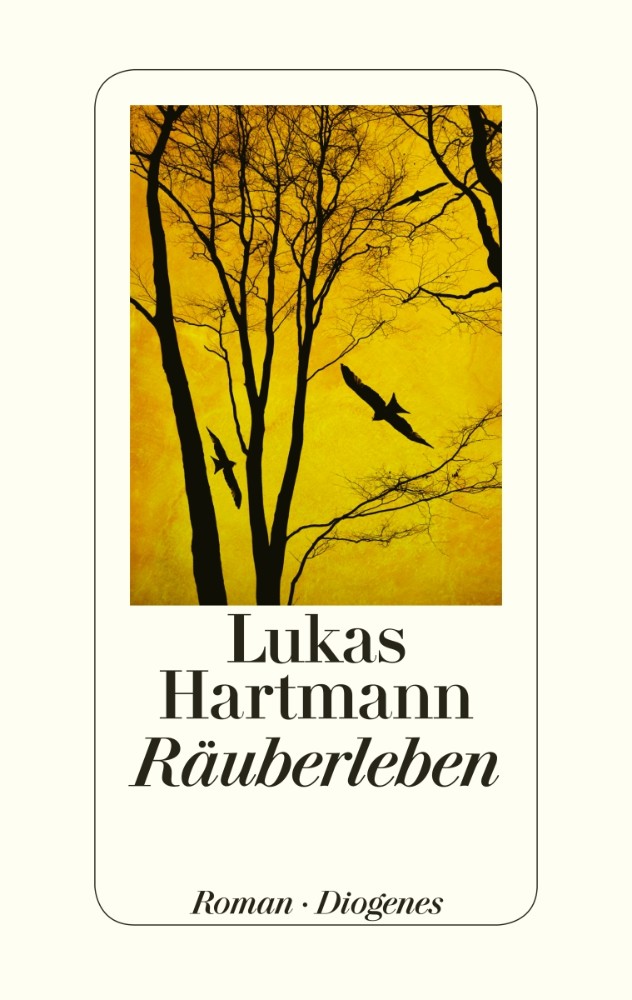
Of all the robbers who cast fear and terror at the end of the 18th century, Hannikel was one of the most feared. Just the sound of his name was enough to make any child in the Black Forest or Elsace tremble. And Hannikel is on the run, with his most loyal men, along with their women and children. Where can he find a safe place for them? Jacob Schäffer, the head magistrate of Sulz, is obsessed with one mission: to put a stop to robbers, crooks and gypsies. After an honour killing, he finally tracks Hannikel down to a sighting in Chur, in Graubünden. Wilhelm Grau, Schäffer’s clerk, has been in on the hunt for the Hannikel band from the start. But he is finding it increasingly difficult to see these people as monsters – especially Dieterle, Hannikel’s eleven-year old son. A gripping and lively novel which leads the reader from gypsy camps in the depths of the Black Forest to the private quarters of Duke Karl Eugen and his wife Franziska. A tense and multi-layered novel, based on the true story of the robber Hannikel.
»Lukas Hartmann has taken the historical material about Hannikel and the magistrate Jacob Schäffer of Sulz, whose job was to track him down, and made it into a novel which strips the robber’s life of its romance, but not of its excitement.«buchjournal
»Dirty, tough and sad – that’s the nature of the crime that Lukas Hartmann has reconstructed in this suspenseful novel. [...] A book that refreshingly refuses to indulge in folklore, including any romantic notions of robber life. [...] While superficially robber and gendarme are playing a game of cat and mouse according to the old rules and familiar patterns, they are really puppets in a show about radical historical change, whose irresistible dynamics leave no space for a pre-modern figure like Hannikel.«spiegel.de
»It is almost documentary, good enlightenment literature.«BuchMarkt
»Lukas Hartmann knows how to narrate history in a way that makes us see the present differently. [...] He draws a rich picture of the time, moving between the dreary room in which Grau writes and the beauty of his insect collection, between squalid gypsy encampments, miserable orphanages and the magnificent court of Duke Charles Eugene.«Augsburger Allgemeine
»Lukas Hartmann tells his story in his familiar clear and sober language, and by changing perspectives and bringing in subtle details, manages to make the period and the protagonists astonishingly accessible to today's reader. There is no need to read the novel as an allegory – but whatever the reader's own view of the world, it provides ample fodder for reflecting on the way he approaches minorities.«Schweizer Monat
»In contrast to the purely documentary accuracy of an author like Hermann Kurz and the more recent writers of historical novels, Hartmann uses the historically specific to create something that is poetically universal. The story is not told from the usual perspective of the historian, chronologically ordering and editing the archive material; rather, different characters present their conflicting points of view. [...] a historical panorama, which is a great merit of the book. [...] Lukas Hartmann is never in danger of lapsing into social revolutionary clichés. [...] But the effect is by no means dry or clinical, but informative and exciting.«Frankfurter Allgemeine Zeitung