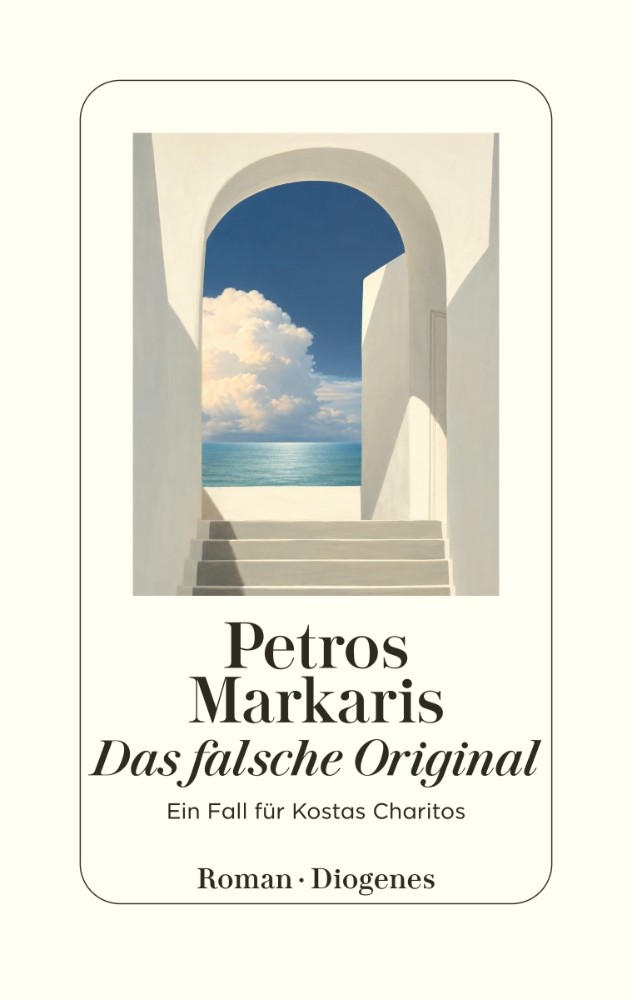
Three Graces
Volume 11
A Case for Costas Haritos
Volume 11
Published by Diogenes as Drei Grazien
Original Title: Seminaria fonikis grafis

In his new Costas Haritos novel, Greece’s beloved bestselling author satirizes the education business, his unmistakable tone combining pithy wording and Mediterranean wit.

Haritos and holidays? These two rarely seem to happen. But now, Costas and Adriani do take a trip to Epirus. At their hotel, they meet the Three Graces, a trio of vivid elderly Greek ladies, who are ready and willing to go on any excursion and happy to read anyone’s future from their coffee grounds – a rosy future, when it comes to the Haritos family.
But back in Athens a brutal case is waiting for the detective inspector. A professor has been poisoned. The academic world is rotten to the core. Rosy prospects? Sadly not here.

Crime Fiction, Contemporary Literature
368 pages
2018

978-3-257-07041-5
Petros
Markaris

Petros Markaris, born in Istanbul in 1937, is a playwright and creator of a TV series who worked as an author with Theo Angelopoulos, and translated the works of German dramatists like Brecht and Goethe. He began writing crime novels in the mid-1990s, and became an international success. His accolades include the ›Pepe Carvalho Prize‹, the ›Goethe Medal‹ and an honorary doctorate from the University of Thessaloniki. Petros Markaris lives in Athens.

Photo: © Regine Mosimann / Diogenes Verlag

Series

Volume 15
Petros Markaris
The Revolt of the Caryatids
Show more
Volume 16
Petros Markaris
The Violence of Failure
Show more
Volume 15
Petros Markaris
The Revolt of the Caryatids
Show more
Volume 16
Petros Markaris
The Violence of Failure
Show more

Quotes

Ursula Burkert
Ö1, Vienna

»His critical view noted developments in Athens right from the start and he analysed them with his sharp mind.«

Margit Ringer
BR 24, Munich

»Inspector Costas Haritos is back, investigating without violence, yet with a great deal of humour and sarcasm.«


Laura Fernández
El País, Madrid

»Petros Markaris, the man who elevated the Greek roman noir to the social chronicle of an epoch – namely that of the everlasting crisis – always writes in protest of something.«

Giancarlo De Cataldo
La Repubblica, Rome

»Markaris’ great qualities include his well-constructed plots and his original endings – here once again.«