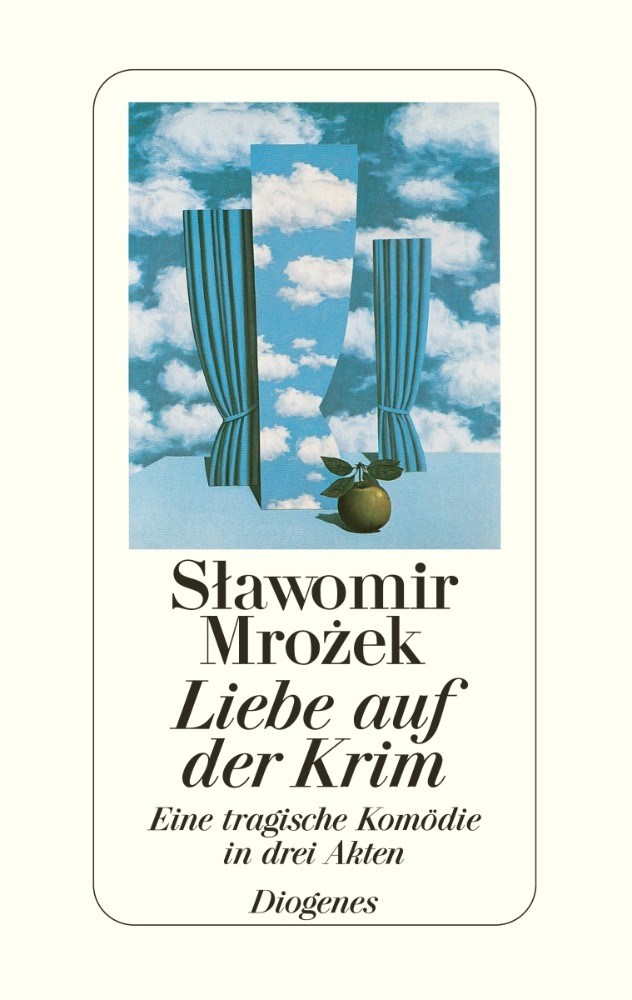
In a luxury hotel on the Crimea, around 1910, superfluous people kill time with tea parties. Characters from Checkov plays are among those present. The actress Liliana Karlovna, married to a German railway engineer, is unhappily in love with Colonel Sejkin; Zachedrynskij, a distinguished gentleman loves the young teacher Tatjana, who, however, wants not to marry but to dedicate her life to the education of the people. Young Vladimir Iljitsch Lenin arrives on the scene, thinking he had heard a shot from the Aurora. The company reassures him: it is not yet time for that – and anyway, when it does happen, it will be in St. Petersburg. This, then, is the opening scene of the first act of the three-act play which casts a satirical light on a hundred years of Russian history. Many of the characters introduced in the Act 1 reappear in the second act, which is set in the period immediately after the Revolution. In the third act, after Perestroika, the hotel is the meeting place of the new Russian businessmen. But here, we encounter the Uncle Vanjas and the Lopatkins, even if they have changed on the surface, and the romantic attachment between the new Tatjanas and Zachedrynskijs, the Lilianas and the Sejkins, are just as complicated in 1993 as they were in 1910. Everything has changed, but the structures remain the same. Or do they?