Filter
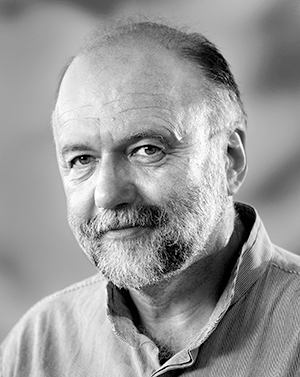
Andrej Kurkow, born in 1961 in what was then Leningrad, has lived in Kyiv since his childhood. He studied foreign languages and became a newspaper editor and screenwriter. Since his novel Death and the Penguin, he has been considered one of the Ukraine’s most important contemporary authors. His work has been translated into forty-five languages. Kurkow lives with his family in Ukraine as a freelance writer. In 2023, he was made an honorary member of the American Academy of Arts and Letters.
Series
Quotes
»Andrej Kurkows knows how to make a story entertaining and amusing.«
(author)
»Kurkov's style is spare and effective, drawing us with deception ease into a dense, complex world full of wonderful characters.«
The Guardian, London
»A latter-day Bulgakov [. . .] A Ukrainian Murakami.«
The Daily Telegraph, London
»A post-Soviet Kafka.«
The Spectator, London
»A kind of Ukrainian Kurt Vonnegut.«
NPR’s Fresh Air, Washington D.C.
»Kurkov writes short, sly, page-turners that specialize in what we might call absurdist noir.«
La Chronique, Brussels
»Armed with the hilarious animal metaphors that populate his books, Kurkow depicts a humorous and scathing satire of the post-Soviet world, and of a Ukrainian society rediscovering itself, independent and riven by mafia, chaos and corruption.«
Le Monde, Paris
»Andrey Kurkov connects the absurd with the ordinary, the comic with the sordid.«
La Croix, Montrouge
»He works with such imaginative power, which nothing seems to be able to quench, with a humorous and tender tone, with protagonists who don’t have their fate in their hands, yet are saved by goodness and kindness.«
El Mundo, Madrid
»His prose marked by humour and a contagious humanity evokes magical realism and the absurd.«
ABC, Madrid
»Andrey Kurkov’s writing style moves between the unexpected, the beautiful and the hilarious –– a tone that permits him to tell a tragedy without renouncing the paradox and the satire.«
Helsingin Sanomat, Helsinki
»It is no surprise that Kurkov began his literary career as a joke writer during the Soviet era. His humour is sharp and precise, but never cynical. As long as there is laughter, there is also hope, even within a rotten system.«
News
Awards
Andrej Kurkow erhält den ›Orwell Prize‹ in der Kategorie Spezial Prize for ‘one of the finest bodies of work in contemporary literature’
Englische Übersetzung von Samson und Nadjeschda auf der Longlist des ›International Booker Prize‹
Italienische Übersetzung von Samson und Nadjeschda für den ›Premio Strega Europeo‹ nominiert
englische Übersetzung von Jimi Hendrix live in Lemberg auf der Longlist des ›International Booker Prize‹
Als ausländisches Ehrenmitglied (Foreign Honorary Membership) in die ›American Academy of Arts and Letters‹ aufgenommen
›Geschwister Scholl Preis‹ für Tagebuch einer Invasion
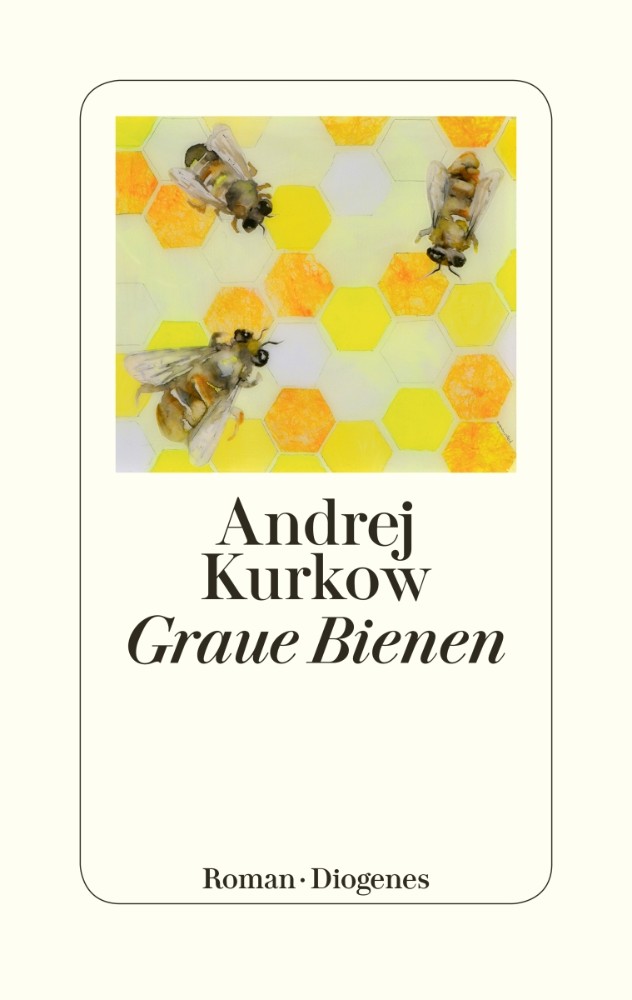
Graue Bienen nominiert für den ›Prix du meilleur livre étranger‹
Graue Bienen auf der Shortlist des ›Prix Fémina‹
›Prix Médicis étranger‹ für Graue Bienen
›The Halldór Laxness International Literature Prize‹
›Fulbright Visiting Scholar-Stipendium‹ in San Diego, Kalifornien, USA
Ernennung zum ›Chevalier de la Légion d'Honneur‹ durch den französischen Präsidenten François Hollande
›Prix des lecteurs‹, Frankreich, für Der Gärtner von Otschakow
›Premio Gogol‹, Rom
Jurymitglied für den ›Man Booker International Prize 2009‹
Writer in Residence in Innsbruck
Nach Einschätzung der Zeitschrift Lire ist Andrej Kurkow einer der 50 wichtigsten Schriftsteller der Welt.
Preis ›Schriftsteller des Jahres 2001‹, den Buchhändler anlässlich der Buchmesse in der Ukraine vergeben haben
In der Ukraine als Künstler des Jahres 2001 mit dem Preis ›Mann des Jahres‹ ausgezeichnet
Sein Drehbuch Ein Freund des Verblichenen wird für den ›Felix‹-Preis in der Kategorie ›Bester Europäischer Drehbuchautor des Jahres‹ nominiert.
Das Drehbuch, basierend auf Kurkows Erzählung Ein Freund des Verblichenen, erhielt ein Stipendium vom französischen Kultusministerium, wodurch der Film teilfinanziert werden konnte. Priyatel pokoynika wurde 1997 eim Filmfestival in Cannes gezeigt.
Stipendium der Heinrich-Böll-Stiftung für seine Erzählung Liebeslied eines Kosmopoliten
Nominierung des Romans Bikfordov mir für den Russischen Booker Prize