Home
  • Leser:innen
  • Presse
  • Buchhandel
  • Foreign Rights
  • Film Rights
  • Theaterverlag
toggle menu
  • Books
  • Authors
  • Reprint Inquiries
  • About Diogenes
  • Catalogues
  • ←
  • Books
  • Authors
  • Reprint Inquiries
  • About Diogenes
  • Catalogues
  • Bereiche
    • Leser:innen
    • Presse
    • Buchhandel
    • Foreign Rights
    • Film Rights
    • Theaterverlag

Search results „Eine andere geschichte”

Blogposts (506)

»Es geht nicht um Geschichte, sondern um Geschichten.« Charles Lewinsky im Interview

from 26/08/2020

Heisse Zeiten, heisse Geschichten

from 09/04/2015

Zu Ostern ein gutes Buch: Geschichten, die Frühlingsgefühle erwecken

from 27/03/2026

Yorn - Zum Muttertag, die Geschichte eines ganz besonderen Geschenkes

from 10/05/2020

»Die Geschichte, die mir vorschwebte, gab es nicht – also musste ich sie selber schreiben.«

from 26/02/2016

»Die Geschichte wiederholt sich.« Ein Interview mit Sasha Filipenko

from 25/02/2023

Weihnachten im Taschenbuch – Geschichten für die Adventszeit

from 29/11/2024

»Bei all meinen Recherchen und Erkenntnissen über Isidors Leben hatte ich das Gefühl, ich gebe ihm eine Geschichte – SEINE Geschichte zurück.« Ein Interview mit Shelly Kupferberg - Teil 1

from 21/10/2022

Mag ich / Mag ich nicht – heute mit: Solomonica de Winter

from 04/11/2014

Astrid Rosenfeld »Sing mir ein Lied« – Die Geschichte hinter dem Buch

from 17/12/2014

Amélie Nothomb ›Der belgische Konsul‹: Ein berührender Blick auf die Geschichte ihres Vaters

from 07/07/2023

Astrid Rosenfeld: »Sing mir ein Lied. 9872 Meilen und eine Geschichte«

from 28/11/2014
More blogposts

Books and authors (5)

Filter
Author (1)→
Genre (1)→

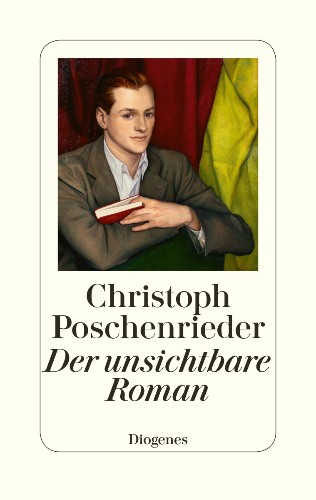
Der unsichtbare Roman
Im Warenkorb
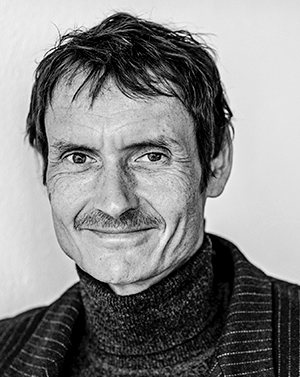
Christoph Poschenrieder

The Invisible Novel

A writer is led into temptation by the German Foreign Office.

The novel about the power of conspiracy theories and fake news tells the story of a genuine historical event with mischievous and laconic humour.

Who is to blame for World War I? In 1918 the question becomes ever more urgent. In his villa on Lake Starnberg the bestselling writer Gustav Meyrink receives an offer from the German Foreign Office. Would he be willing – for a decent fee – to write a novel pinning the blame for all the blood spilled on the freemasons? Meyrink, who is actually an unpatriotic writer and yoga practitioner, accepts the advance – and gets himself into hot water.

»Words win wars.«

Further readings
  • Fact sheet PDF
  • Extract in German
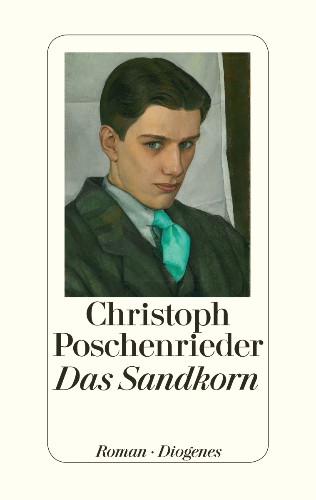
Das Sandkorn
Im Warenkorb
Christoph Poschenrieder

A Grain of Sand

1914. A man scatters sand from the South of Italy on the streets of Berlin. At a time of war, such behaviour is not only strange, but suspicious, too. The inspector who takes on the mysterious case finds himself caught up in a story of love and taboo between two men and a woman: Jacob Tolmeyn, an art historian from Berlin, fears persecution due to his homosexuality and takes up a research post in Southern Italy, far away from the dangers of the big city. He inspects the Staufian forts together with his assistant Beat, a former Papal Swiss Guard, when they meet Letizia, an Italian women’s rights campaigner. The three of them experience the dangers and opportunities of their era until Tolmeyn returns to Berlin, where he unwillingly attracts the inspector’s attention with a trail of sand.

A Grain of Sand on the Longlist of the German Book Prize 2014.

Further readings
  • Fact sheet PDF
  • Extract in German
Isabel Koellreuter

Isabel Koellreuter

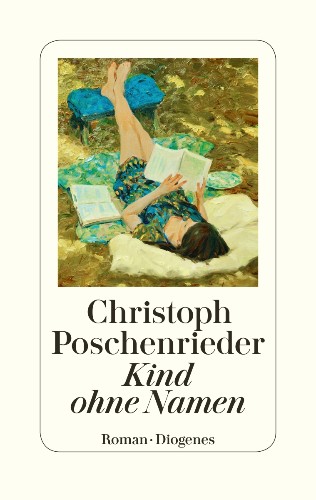
Kind ohne Namen
Im Warenkorb
Christoph Poschenrieder

A Child with No Name

A modern saga about the fear of the other, set in a small village.

After a year at university, Xenia returns to her home – a village in the middle of nowhere. She is pregnant, but does not want anyone to find out.

When a dozen foreigners are provided with temporary accommodation in the school, there is uproar in the village. In order to restore peace, Xenia’s mother gets involved in an ominous deal with the secret ruler of the region, unknowingly endangering the life of her unborn grandchild.

Further readings
  • Fact sheet PDF
  • Extract in German
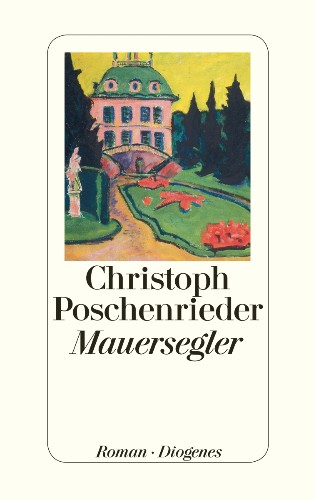
Mauersegler
Im Warenkorb
Christoph Poschenrieder

Common Swift

Five old friends – successful, affluent men who have shaped the country – venture into an experiment. Together they found a flatshare in a beautiful house with a sea view, and make a pact: each of them should be able to die in the way he chooses – and the others will help him. But first they enjoy their retirement. They smoke, drink, eat, what and when they want, without having wives or nurses telling them not to. When it gets serious for the first of them, they activate the ›Death Angel Programme‹ as designed by the computer buff of the flatshare. And they hire Katarina, a nurse from Kirgizia, who has her very own ideas about how to fill the villa with life again...

Further readings
  • Fact sheet PDF
  • Extract in German
Norman Ohler

Norman Ohler

Norman Ohler, born in 1970, is a freelance author and lives in Berlin. He has written several novels and screenplays and was awarded the ›Pfalz Literature Prize‹. His book Blitzed: Drugs in Nazi Germany was a New York Times bestseller and a Spiegel bestseller. His works have been published in more than 30 languages.

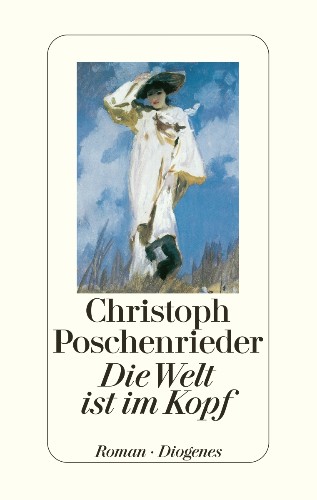
Die Welt ist im Kopf
Im Warenkorb
Christoph Poschenrieder

The World in the Head

He is done with studying – now he wants to live. A month-long journey takes the young Schopenhauer from Dresden to Venice, from Goethe to Lord Byron, over rugged mountains and through broad valleys into the labyrinth of canals – and the maelstrom of reality. Schopenhauer would be only too pleased to see philosophers and writers reacting to his ideas – to see Hegel giving up his throne, and the elderly Goethe paying tribute to him, a mere 30 year old. But publication of his groundbreaking work has been delayed. And so Schopenhauer leaves Dresden for Italy in the late summer of 1818 without his book in his suitcase – he is still a nobody. Even before he arrives he attracts the attention of Metternich's secret police: Goethe's note recommending him to Lord Byron – a man with a wide reputation as a poet and as a figure of scandal – casts suspicion on Schopenhauer and makes him unwelcome in Austrian-occupied Veneto. But once he gets to Venice, Schopenhauer refuses to be driven out and certainly not after he meets Teresa. For Teresa shows the young philosopher that he still needs to rethink one point in his world view: his idea of love.
Christoph Poschenrieder gives us a Schopenhauer who is somewhat different from what he is generally imagined. His hero still sees the world through the lens of his philosophy, it is true, but that philosophy, like the man himself, is surprisingly sensual and lively.

Further readings
  • Fact sheet PDF

  • Contact
  • Reprint Inquiries
  • Newsletter
  • Blog
  • Facebook
  • Twitter
  • YouTube
  • Instagram
  • Mastodon
  • Leser:innen
  • Presse
  • Buchhandel
  • Foreign Rights
  • Film Rights
  • Theaterverlag
  • Privacy Policy
  • Terms of Use
  • Imprint
↑