Home
  • Leser:innen
  • Presse
  • Buchhandel
  • Foreign Rights
  • Film Rights
  • Theaterverlag
toggle menu
  • Books
  • Authors
  • Reprint Inquiries
  • About Diogenes
  • Catalogues
  • ←
  • Books
  • Authors
  • Reprint Inquiries
  • About Diogenes
  • Catalogues
  • Bereiche
    • Leser:innen
    • Presse
    • Buchhandel
    • Foreign Rights
    • Film Rights
    • Theaterverlag

Search results „Eine andere geschichte”

Blogposts (506)

»Es geht nicht um Geschichte, sondern um Geschichten.« Charles Lewinsky im Interview

from 26/08/2020

Heisse Zeiten, heisse Geschichten

from 09/04/2015

Zu Ostern ein gutes Buch: Geschichten, die Frühlingsgefühle erwecken

from 27/03/2026

Yorn - Zum Muttertag, die Geschichte eines ganz besonderen Geschenkes

from 10/05/2020

»Die Geschichte, die mir vorschwebte, gab es nicht – also musste ich sie selber schreiben.«

from 26/02/2016

»Die Geschichte wiederholt sich.« Ein Interview mit Sasha Filipenko

from 25/02/2023

Weihnachten im Taschenbuch – Geschichten für die Adventszeit

from 29/11/2024

»Bei all meinen Recherchen und Erkenntnissen über Isidors Leben hatte ich das Gefühl, ich gebe ihm eine Geschichte – SEINE Geschichte zurück.« Ein Interview mit Shelly Kupferberg - Teil 1

from 21/10/2022

Mag ich / Mag ich nicht – heute mit: Solomonica de Winter

from 04/11/2014

Astrid Rosenfeld »Sing mir ein Lied« – Die Geschichte hinter dem Buch

from 17/12/2014

Amélie Nothomb ›Der belgische Konsul‹: Ein berührender Blick auf die Geschichte ihres Vaters

from 07/07/2023

Astrid Rosenfeld: »Sing mir ein Lied. 9872 Meilen und eine Geschichte«

from 28/11/2014
More blogposts

Books and authors (10)

Filter
Author (1)→
Genre →

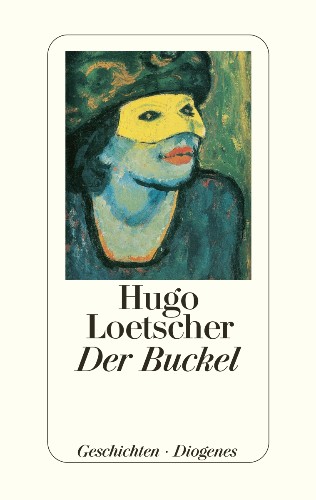
Der Buckel
Im Warenkorb
Hugo Loetscher

The Hunchback

In these nineteen stories, many of them hitherto unpublished, there is one theme that constantly returns: ›Der Buckel‹ is about damaged people, the cast-outs and under-privileged, who furnish a telling example of Hugo Loetscher's narrative range and variety. The stories are told with unfailing artistry, precision and cryptic irony. Their playful lightness of touch and pleasure in yarn-spinning do not hide the fact that it is precisely man's vulnerability that can be translated into literature.

Further readings
  • Fact sheet PDF
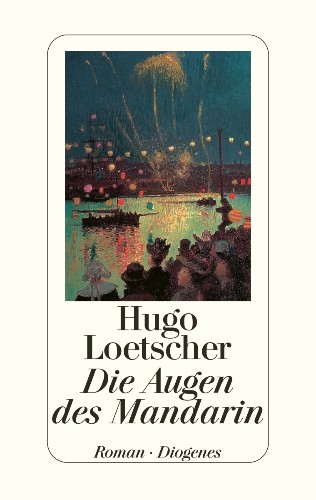
Die Augen des Mandarin
Im Warenkorb
Hugo Loetscher

The Eyes of the Mandarin

Can blue eyes see? asked the mandarin when he encountered European barbarians for the first time. Can blue-green eyes see? asks Past. Not at the Imperial Court of Peking, but in a European city like Zurich, a good three hundred years later. Not in a realm faced with the decline of its dominion, but on a continent that has lost its significance. The question about the ability of his eyes to see reminds Past, an ex-employee of an obscure cultural foundation and specialist for commemoration days and New Year celebrations, of incidents from his eventful life. It leads him back to almost all parts of the earth, it evokes penetrating stories and anecdotes, with a disturbing, intoxicating juxtaposition of continents, times and images in which boundaries and centres dissolve and the familiar is revealed in the alien and the alien in the familiar. A balance of an intensive life by an eternally curious man who thinks on a wide scale merely for professional reasons, and who is full of vitality, scepticism and thoughtfulness – and of a serenity reminiscent of the Far East.

Further readings
  • Fact sheet PDF
Isabel Koellreuter

Isabel Koellreuter

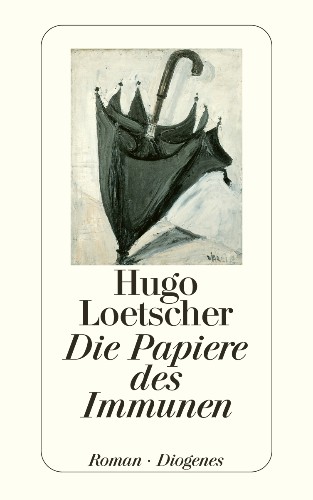
Die Papiere des Immunen
Im Warenkorb
Hugo Loetscher

Papers of the Immune Man

Among the ›Papers of an Immune Man‹ can be found the story of a man who invites guests to his own funeral feast as well as the story of another man who plans an assassination in a house of waxworks; the reader encounters a puppet murderer, a sinful priest; a rebel from the Peasants' War; a nursery rhyme becomes a political issue; and Leporello's aria of the cities can be heard. This and other ›papers‹ are mirrors and counter-images of the immune man, his interpretations and longings…

Further readings
  • Fact sheet PDF
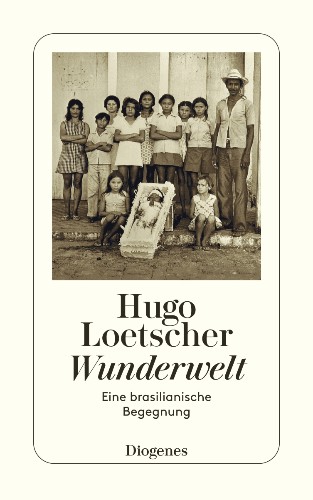
Wunderwelt
Im Warenkorb
Hugo Loetscher

Was My Time My Time

A European man encounters the myths of life and death of a foreign culture: a hymn and even more an elegy, written for a little girl. The European man assigns this ›wonder world‹ to a series of stories, transforms these stories into images, juggles with them, plays with his image stories, shows them to the little girl and becomes enmeshed in them himself.

Further readings
  • Fact sheet PDF
Norman Ohler

Norman Ohler

Norman Ohler, born in 1970, is a freelance author and lives in Berlin. He has written several novels and screenplays and was awarded the ›Pfalz Literature Prize‹. His book Blitzed: Drugs in Nazi Germany was a New York Times bestseller and a Spiegel bestseller. His works have been published in more than 30 languages.

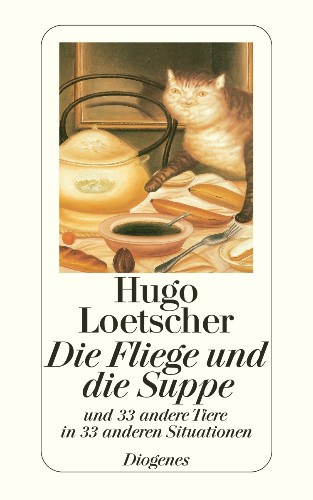
Die Fliege und die Suppe
Im Warenkorb
Hugo Loetscher

The Fly and the Soup

The stories told by Hugo Loetscher are conduct fables. The animals do not talk like humans but behave like animals, though in situations not always of their own choosing such as the mule in the army, the poodle at the beauty contest, the monkey in the rocket or the rat in the laboratory. A ›comédie animale‹ whose morality lies in its depiction.

Further readings
  • Fact sheet PDF
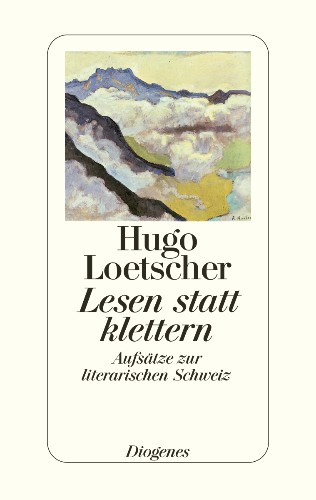
Lesen statt klettern
Im Warenkorb
Hugo Loetscher

Read, Don’t Climb!

From the Alps to urbanity: It is not in Albrecht von Haller's glorification of the Alps that Loetscher sees the origins of Swiss literature, but rather in the autobiography of Thomas Platter, the country lad who leaves the mountains to try his luck in Basle, the city of humanism. Thus we are afforded an unconventional outlook, through and beyond literature, on an identity stretching from Salomon Gessner's false flute idyll to the uncomfortable atmosphere of Gottfried Keller's Seldwyla, from the hasty shelters of Ludwig Hohl to Adrien Turel's yearning for the future. A remarkable gallery of figures is thereby assembled, including the »poor devil« Friedrich Glauser, the unusual Marxist Konrad Farner and the gifted »phoney« Blaise Cendrars. The essays are not wholly impersonal when the author writes of his »difficult admiration« for Max Frisch or his remembrances of Friedrich Dürrenmatt, who plays a leading role in this collection. One learns a few things about people such as Adolf Muschg and Niklaus Meienberg in a Swiss chat room. Whatever the debate at hand, those who read instead of climb will once again enjoy brilliant essays by Hugo Loetscher.

Further readings
  • Fact sheet PDF
Solomonica de Winter

Solomonica de Winter

Solomonica de Winter was born in 1997 in Bloemendaal, the Netherlands. Raised bilingually, she grew up both there and in Los Angeles, California. She has lived in Israel, Italy, and the USA and graduated with a Masters Degree of Fine Arts in Fiction Writing at the Vermont College of Fine Arts. She currently resides in the Netherlands. Solomonica de Winter writes in English.

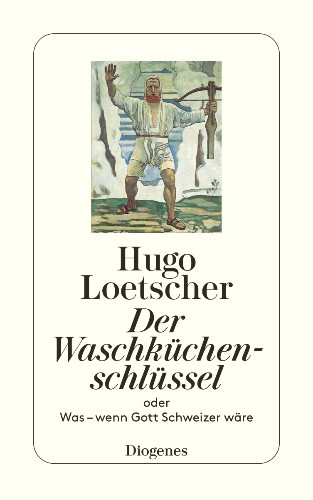
Der Waschküchenschlüssel
Im Warenkorb
Hugo Loetscher

The Laundry Room Key

A Laundry Room Key or lists of expressions for the word ›to work‹, the eighth deadly sin or a Swiss girl by the sea are all treated by Hugo Loetscher as inspiration for stories like the ones in this collection. What holds these critical and amusing ponderings together is a Helvetic theme, displaying a predilection for individuality and balance. But Hugo Loetscher always breaks the boundaries of these Swiss themes with the natural cosmopolitanism that distinguishes him as an author – whether he's writing about his experiences at the post office counter or posing the question: What if God were Swiss? In these commentaries on Switzerland, Loetscher shows himself to be a committed satirist who has mastered the art of opening the gates to the Swiss soul.

Further readings
  • Fact sheet PDF
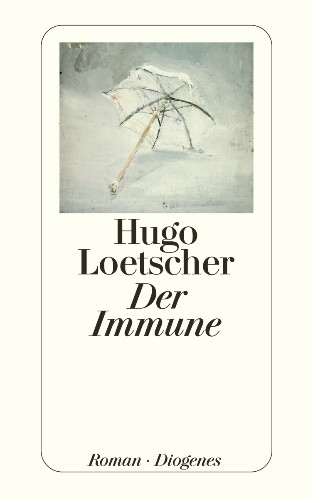
Der Immune
Im Warenkorb
Hugo Loetscher

The Immune Man

For the immune man, the world, from his earliest childhood, is a stage. He nevertheless uses his talent for telling stories and observing the world in order to 'immunise' himself against brutality and hypocrisy. How else could one suffer this world? In a self-critical analysis of the I in the form of an abundance of short stories, Hugo Loetscher describes the epoch in which this ego developed.

Further readings
  • Fact sheet PDF
Daniel Faßbender

Daniel Faßbender

Daniel Faßbender used to be a sailor and dreamed of becoming a professional surfer. He earns his living as a duty editor for a large private TV channel. He studied comparative literature, politics and history. His debut novel The World’s Greatest Story of Falling was released in 2018 and longlisted for the ›Blogbuster Literature Prize‹. For Heaven’s Gate he was awarded a fellowship with the NRW Literary Office’s and Bonn Literature House’s one-to-one mentoring programme. He lives in Cologne, his native city.

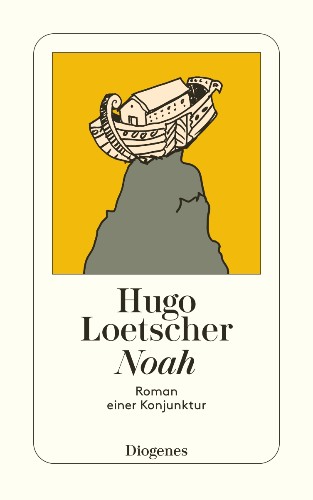
Noah
Im Warenkorb
Hugo Loetscher

Noah

The story of a man who boosts the economy with his plan to build the ark. Nobody really believes in the coming flood but everybody uses it to make money. The economy flourishes and eventually collapses in a series of scandals – as does the culture industry. Noah's situation deteriorates until one person can say in the end: »Now only a deluge can save him.«

Further readings
  • Fact sheet PDF
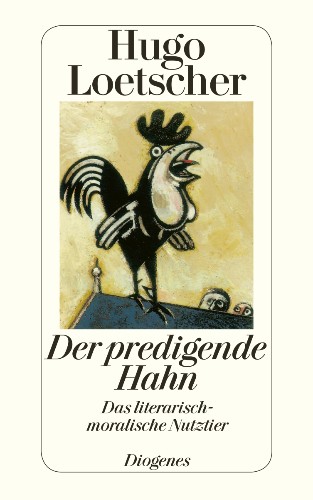
Der predigende Hahn
Im Warenkorb
Hugo Loetscher

The Preaching Rooster

A stroll through literature and myths. Animals, allegedly the brothers and sisters of humankind, are used by people not only for their physical needs - without animals, literature and painting would be very different from what we are accustomed to. As if being an animal wasn't hard enough to begin with - human beings humanized animals. One of the consequences: they began to speak. And thanks to their humanization, the animals behaved like reasonable people, nothing humans was alien to them. Hugo Leotscher has gathered incredible material from all the nooks and crannies of world literature and shows that almost no author known to us could have lived and written in the absence of animals. Remember Kafka and the beetle...

Further readings
  • Fact sheet PDF
Patrick Süskind

Patrick Süskind

Patrick Süskind, born in Ambach on Lake Starnberg in 1949, studied medieval and modern history in Munich and Aix-en-Provence, making a living writing screenplays. His one-man play The Double Bass was published in 1984, his novel Perfume: The Story of a Murderer in 1985, the novella The Pigeon in 1987 and The Story of Mr Sommer with illustrations by Jean-Jacques Sempé in 1991.


  • Contact
  • Reprint Inquiries
  • Newsletter
  • Blog
  • Facebook
  • Twitter
  • YouTube
  • Instagram
  • Mastodon
  • Leser:innen
  • Presse
  • Buchhandel
  • Foreign Rights
  • Film Rights
  • Theaterverlag
  • Privacy Policy
  • Terms of Use
  • Imprint
↑