Home
  • Leser:innen
  • Presse
  • Buchhandel
  • Foreign Rights
  • Film Rights
  • Theaterverlag
toggle menu
  • Books
  • Authors
  • Reprint Inquiries
  • About Diogenes
  • Catalogues
  • ←
  • Books
  • Authors
  • Reprint Inquiries
  • About Diogenes
  • Catalogues
  • Bereiche
    • Leser:innen
    • Presse
    • Buchhandel
    • Foreign Rights
    • Film Rights
    • Theaterverlag

Search results „Eine andere geschichte”

Blogposts (506)

»Es geht nicht um Geschichte, sondern um Geschichten.« Charles Lewinsky im Interview

from 26/08/2020

Heisse Zeiten, heisse Geschichten

from 09/04/2015

Zu Ostern ein gutes Buch: Geschichten, die Frühlingsgefühle erwecken

from 27/03/2026

Yorn - Zum Muttertag, die Geschichte eines ganz besonderen Geschenkes

from 10/05/2020

»Die Geschichte, die mir vorschwebte, gab es nicht – also musste ich sie selber schreiben.«

from 26/02/2016

»Die Geschichte wiederholt sich.« Ein Interview mit Sasha Filipenko

from 25/02/2023

Weihnachten im Taschenbuch – Geschichten für die Adventszeit

from 29/11/2024

»Bei all meinen Recherchen und Erkenntnissen über Isidors Leben hatte ich das Gefühl, ich gebe ihm eine Geschichte – SEINE Geschichte zurück.« Ein Interview mit Shelly Kupferberg - Teil 1

from 21/10/2022

Mag ich / Mag ich nicht – heute mit: Solomonica de Winter

from 04/11/2014

Astrid Rosenfeld »Sing mir ein Lied« – Die Geschichte hinter dem Buch

from 17/12/2014

Amélie Nothomb ›Der belgische Konsul‹: Ein berührender Blick auf die Geschichte ihres Vaters

from 07/07/2023

Astrid Rosenfeld: »Sing mir ein Lied. 9872 Meilen und eine Geschichte«

from 28/11/2014
More blogposts

Books and authors (11)

Filter
Author (1)→
Genre (1)→

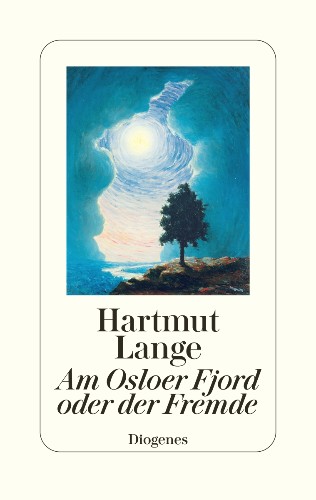
Am Osloer Fjord oder der Fremde
Im Warenkorb
Hartmut Lange

At the Oslo Fjord or The Stranger

A viral plague that could destroy humanity: but isn’t it already under threat from a far worse enemy? What is it that audiences admire about seeing a consumptive depicted on the operatic stage, or an absinth-drinker in a museum? What happens when nature attacks a monument that humanity has erected to itself? A book about parting, and the experience of wounds that refuse to heal – and about the stumbling stones in our own minds. 

Further readings
  • Fact sheet PDF
  • Extract in German
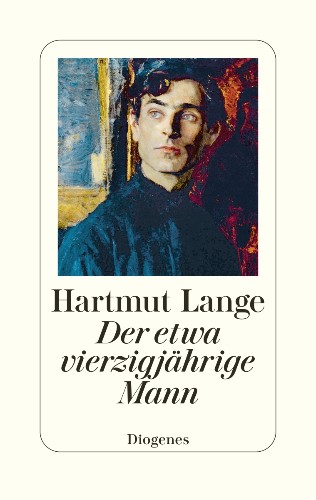
Der etwa vierzigjährige Mann
Im Warenkorb
Hartmut Lange

The Roughly Forty-Year-Old Man

In search of beauty, a man embarks on a journey through the centuries, discovering their horrors. Another man loses himself in love, yet encounters only its impossibility. And a third is led to gaze into the abyss by the eschatological question of ›the last things‹. Hartmut Lange manages to comprehend our troubles in a way almost no other contemporary writer can; to distil them into words; and to simultaneously get right to the heart of the matter in a way thatʼs simply inescapable.

Further readings
  • Fact sheet PDF
  • Extract in German
Isabel Koellreuter

Isabel Koellreuter

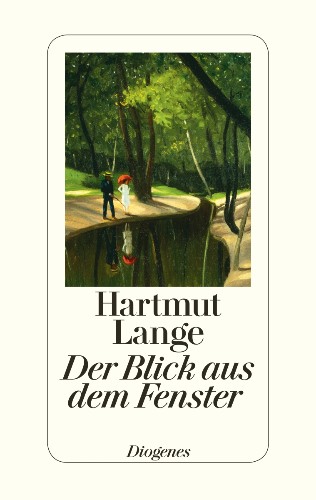
Der Blick aus dem Fenster
Im Warenkorb
Hartmut Lange

The View from the Window

Hartmut Lange’s stories are set in Munich, in a small town near Hamburg, on the Baltic Sea coast, and on the raw north-west coast of England. And again and again in Berlin, where past and present penetrate in a particularly palpable way. Eight stories which are as bright as day and mysteriously condensed, which depict and artfully capture precarious states of mind: deceptive promises of happiness, unfulfillable longing, the need of lonely people, the encounter with evil, the fear of failing.

Further readings
  • Fact sheet PDF
  • Extract in German
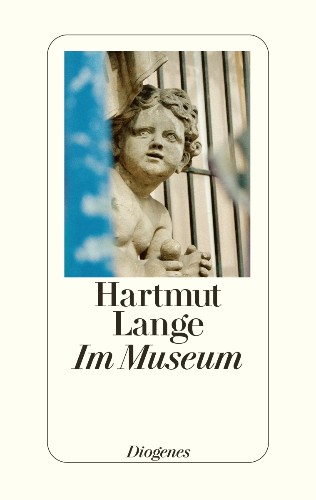
Im Museum
Im Warenkorb
Hartmut Lange

In the Museum

The Museum of German History in Berlin – a ›warehouse full of rubbish‹? Or a place that makes history visible? One thing is for sure, it's a place of baffling apparitions. A museum employee leaves under unusual circumstances. A visitor cannot find the exit. A dark corridor leads to a vanished world. A Stasi officer guards his own past. The restless ghost of Adolf Hitler wanders through the rooms. A mother and her child search for heaven. Rodin's The Thinker is put to the question. A museum can be enriched a great deal by literature. In this novel, the imaginary world transcends the real one, and the seven episodes of this book show just how thrilling, moving, illuminating and uncanny it can be. Whoever reads it will not ever be able to look at a museum in the same way again. Hartmut Lange's prose overcomes space and time, bringing to life not only the shadows which can be found in such a place, but also the great mysterious questions of our very existence.

Further readings
  • Fact sheet PDF
  • Extract in German
Norman Ohler

Norman Ohler

Norman Ohler, born in 1970, is a freelance author and lives in Berlin. He has written several novels and screenplays and was awarded the ›Pfalz Literature Prize‹. His book Blitzed: Drugs in Nazi Germany was a New York Times bestseller and a Spiegel bestseller. His works have been published in more than 30 languages.

Der Abgrund des Endlichen
Im Warenkorb
Hartmut Lange

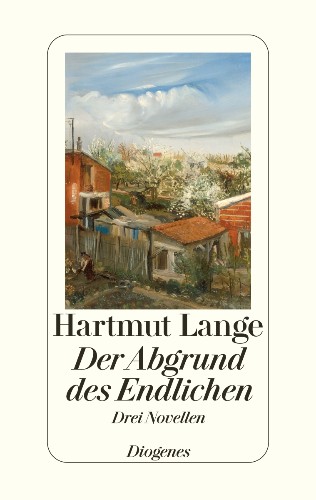
The Abyss of the Finite

Three novellas which have one thing in common: They describe the quest for happiness above the abyss of the finite. In the year of 1948, a young man was murdered near a summer house settlement in Berlin; the culprit was never caught. The brother of the murder victim, by now sixty years older, has all but forgotten him – until one day a man turns up who persistently claims to be the murderer. He says he must atone for his deed and wants the victim's brother to help him in his mission. A historian is fascinated by mystic Hildegard von Bingen, especially her antiphons.When he becomes seriously ill, he must decide where he belongs: in the realm of the past or with his partner, a cardiologist who is used to extending life at all costs. The divorced assistant master with a predilection for his own sex seems as forlorn as the beautiful Mathilde from the Belle Epoque who, unnoticed and walled up, has been left on her pedestal above a car repair shop. His deep yearning revolves around this female figure made of plaster.

Further readings
  • Fact sheet PDF
  • Extract in German
Der Lichthof
Im Warenkorb
Hartmut Lange

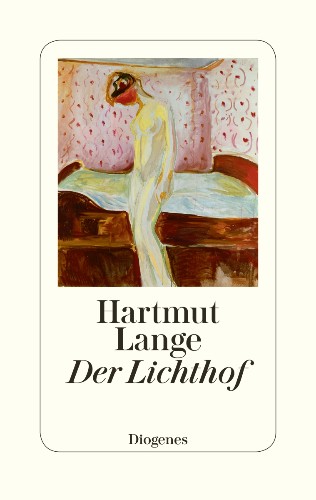
The Courtyard

On existential states of mind, in uniquely condensed form.

One of the last great masters of the novella writes about the magical power of gathering shadows.

With an autobiographical text on deeply formative childhood experiences.

»Love is not an opportunity for freedom; it happens out of necessity,« thinks a woman who realizes her husband has left her.
Darkly luminous yet crystal clear sentences like this one have made Hartmut Lange’s prose famous.
Four novellas, complemented by an autobiographical piece, with which Hartmut Lange tells us about the formative experiences for his life and his writing: Christmas 1944 in Naßwerder, the horrors of forced evacuation, the death of his father and later his brother.

»It was an inkling of how our lives would lack presuppositions, once we could no longer cite the protective hand above us.«
Hartmut Lange

Further readings
  • Fact sheet PDF
  • Extract in German
Solomonica de Winter

Solomonica de Winter

Solomonica de Winter was born in 1997 in Bloemendaal, the Netherlands. Raised bilingually, she grew up both there and in Los Angeles, California. She has lived in Israel, Italy, and the USA and graduated with a Masters Degree of Fine Arts in Fiction Writing at the Vermont College of Fine Arts. She currently resides in the Netherlands. Solomonica de Winter writes in English.

Der Wanderer
Im Warenkorb
Hartmut Lange

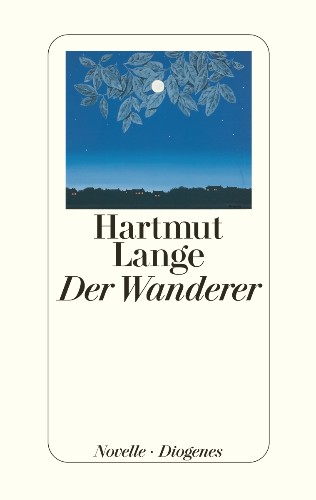
The Wanderer

The latest project of successful novelist Matthias Bamberg has been met with astonishment. His new book is to be called ›The Wanderer‹ – and where it will lead him is anybody's guess. Gradually, however, light is shed on certain events that are unsettling Bamberg. His wife Anita appears to be having an affair and moves out of the apartment they share. So Bamberg books a flight to Cape Town, a bewildering and foreign world, where he suspects he will find Anita and her lover. ›The Wanderer‹ is a story of disturbance, in which reality begins to evaporate and the world of appearances starts to solidify into substance – all the while skilfully held in suspenseful balance by the author.

Further readings
  • Fact sheet PDF
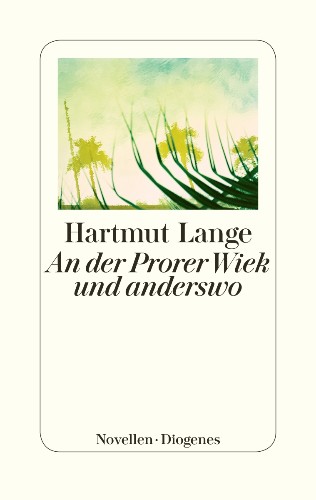
An der Prorer Wiek und anderswo
Im Warenkorb
Hartmut Lange

On the Prorer Wiek and Elsewhere

Hartmut Lange’s novellas present crises and sensitivities in clear, dense prose and are unique in German contemporary literature. They deal with the focal points of life: love – fear – death.

The Prorer Wiek is a bay on the island of Rugen, where the coastal resort of Binz is located, which is famed for its sophistication. And that glamorous history makes it an impressive backdrop for five novellas of unexpected encounters, disappointments and emotional crises.

Five more novellas are set in Rome, a very different but no less intense setting for life’s ultimate questions. And even the ›eternal city‹ – how invulnerable is it really to transience, the deepest human humiliation?

Ten precipitous novellas of melancholy beauty about what once was and what still thrives, about famous pictures, philosophical consolation and the crutch of common sense. And above all about the question: what endures?

Further readings
  • Fact sheet PDF
  • Extract in German
Daniel Faßbender

Daniel Faßbender

Daniel Faßbender used to be a sailor and dreamed of becoming a professional surfer. He earns his living as a duty editor for a large private TV channel. He studied comparative literature, politics and history. His debut novel The World’s Greatest Story of Falling was released in 2018 and longlisted for the ›Blogbuster Literature Prize‹. For Heaven’s Gate he was awarded a fellowship with the NRW Literary Office’s and Bonn Literature House’s one-to-one mentoring programme. He lives in Cologne, his native city.

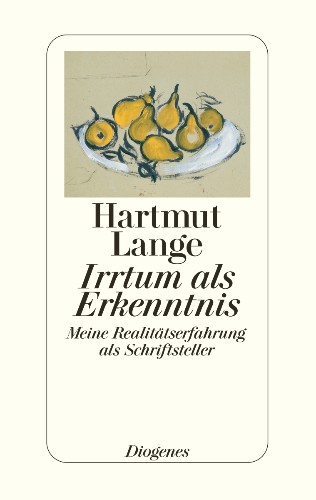
Irrtum als Erkenntnis
Im Warenkorb
Hartmut Lange

Knowledge from Error

A piece of intellectual autobiography by a writer who has delved deeply into the crucial ideologies and beliefs of the 20th century. This volume of essays provides insights into the workshop, self-interpretation and ideas of an independent spirit who ascribes a far higher value to the binding nature of art than that with which we are generally familiar today.

Further readings
  • Fact sheet PDF
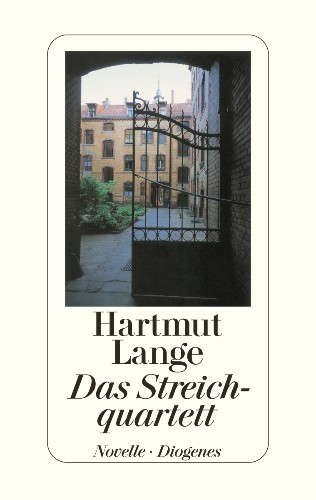
Das Streichquartett
Im Warenkorb
Hartmut Lange

The String Quartet

The disaster begins when Berghoff, the first violin of the quartet of the same name, decides to add Schönberg's String Quartet No. 4, op. 37, to the quartet's repertoire. Schönberg's composition strikes him as being the music of a big-city neurotic – like a mirror in which he slowly starts to recognise himself. He gradually loses his self-confidence, and then his wife tells him that she is taking their daughters away, against his will, on a holiday that seems never-ending. One day he finds a valuable violin in his deserted Berlin apartment, put there by some unknown person – a delightful windfall which he plays at the rehearsals of the Schönberg Quartet. The rehearsals become more and more intensive and Berghoff's behaviour increasingly neurotic. He refuses to accept the fact that someone has long since taken the bow out of his hand. A disturbing drama of jealousy runs its course.

Further readings
  • Fact sheet PDF
Patrick Süskind

Patrick Süskind

Patrick Süskind, born in Ambach on Lake Starnberg in 1949, studied medieval and modern history in Munich and Aix-en-Provence, making a living writing screenplays. His one-man play The Double Bass was published in 1984, his novel Perfume: The Story of a Murderer in 1985, the novella The Pigeon in 1987 and The Story of Mr Sommer with illustrations by Jean-Jacques Sempé in 1991.

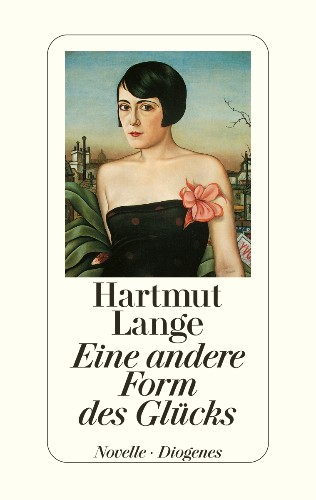
Eine andere Form des Glücks
Im Warenkorb
Hartmut Lange

A Different Kind of Happiness

»Truth lies in disappearance«, a puzzling sentence which runs through the book like a leitmotif and poses many questions. Corinna Mühlbauer, the reticent girlfriend of the renowned Berlin structural engineer Kippenberger, throws doubt not only on her relationship with Kippenberger but also on the marriage of their friends, a dentist couple called Dahlhaus. How does she do it? How does she, who is so often silent and apparently uninvolved, manage to irritate the people around her and plunge them into despair? She is there one minute and gone the next, vanished as if into thin air. The truth lies in disappearance… It is not clear why Corinna suddenly refuses to marry Kippenberger, why she always takes the same route to the Grunewald lake, and why the moon over the lake is visible in the south-east at first, and then in the north-west. The perspectives are confused, nothing is in its right place. The marriage carousel starts slowly to revolve, until Corinna finds the man who she believes understands her »different kind of happiness«. In this mysterious subtle book, Hartmut Lange penetrates spaces far beyond the hectic life of the Berlin metropolis. In brilliantly dense and laconic language, he describes people willing to embark on tortuous paths in their search for happiness.

Further readings
  • Fact sheet PDF

  • Contact
  • Reprint Inquiries
  • Newsletter
  • Blog
  • Facebook
  • Twitter
  • YouTube
  • Instagram
  • Mastodon
  • Leser:innen
  • Presse
  • Buchhandel
  • Foreign Rights
  • Film Rights
  • Theaterverlag
  • Privacy Policy
  • Terms of Use
  • Imprint
↑