Home
  • Leser:innen
  • Presse
  • Buchhandel
  • Foreign Rights
  • Film Rights
  • Theaterverlag
toggle menu
  • Books
  • Authors
  • Reprint Inquiries
  • About Diogenes
  • Catalogues
  • ←
  • Books
  • Authors
  • Reprint Inquiries
  • About Diogenes
  • Catalogues
  • Bereiche
    • Leser:innen
    • Presse
    • Buchhandel
    • Foreign Rights
    • Film Rights
    • Theaterverlag

Search results „Eine andere geschichte”

Blogposts (506)

»Es geht nicht um Geschichte, sondern um Geschichten.« Charles Lewinsky im Interview

from 26/08/2020

Heisse Zeiten, heisse Geschichten

from 09/04/2015

Zu Ostern ein gutes Buch: Geschichten, die Frühlingsgefühle erwecken

from 27/03/2026

Yorn - Zum Muttertag, die Geschichte eines ganz besonderen Geschenkes

from 10/05/2020

»Die Geschichte, die mir vorschwebte, gab es nicht – also musste ich sie selber schreiben.«

from 26/02/2016

»Die Geschichte wiederholt sich.« Ein Interview mit Sasha Filipenko

from 25/02/2023

Weihnachten im Taschenbuch – Geschichten für die Adventszeit

from 29/11/2024

»Bei all meinen Recherchen und Erkenntnissen über Isidors Leben hatte ich das Gefühl, ich gebe ihm eine Geschichte – SEINE Geschichte zurück.« Ein Interview mit Shelly Kupferberg - Teil 1

from 21/10/2022

Mag ich / Mag ich nicht – heute mit: Solomonica de Winter

from 04/11/2014

Astrid Rosenfeld »Sing mir ein Lied« – Die Geschichte hinter dem Buch

from 17/12/2014

Amélie Nothomb ›Der belgische Konsul‹: Ein berührender Blick auf die Geschichte ihres Vaters

from 07/07/2023

Astrid Rosenfeld: »Sing mir ein Lied. 9872 Meilen und eine Geschichte«

from 28/11/2014
More blogposts

Books and authors (15)

Filter
Author (1)→
Genre (1)→
Age →

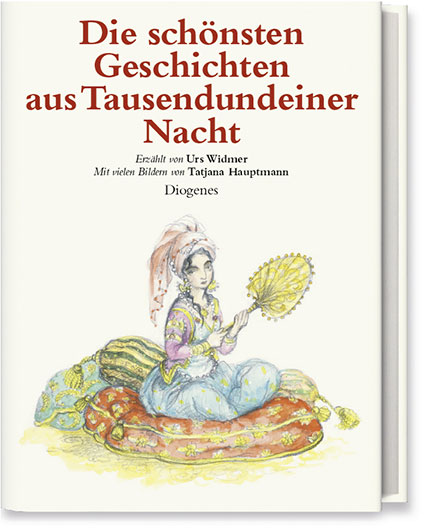
Die schönsten Geschichten aus Tausendundeiner Nacht
Im Warenkorb
Urs Widmer, Tatjana Hauptmann, Hauptmann, Tatjana

The Most Beautiful Tales From the Arabian Nights

For all those who have always shied away from the sheer length of the original Urs Widmer has carefully abridged the wonderful Tales From the Arabian Nights while preserving their oriental flavour. Highly vivid and amusing, he recounts the six most famous tales of the immortal Sheherazade: The Fisherman and the Jinni, Alibaba and the Forty Thieves, Aladdin and the Magic Lamp, The Magic Horse, The Adventures of Haroun-al-Raschid, and Sinbad the Sailor.
As Hermann Hesse pointed out, the original of this great collection of fairytales is »a source of infinite pleasures and the most opulent picture book in the world«. To ensure that this holds true, Tatjana Hauptmann has richly illustrated this work, conveying Oriental lavishness and subtlety.

Further readings
  • Fact sheet PDF
  • Extract in German
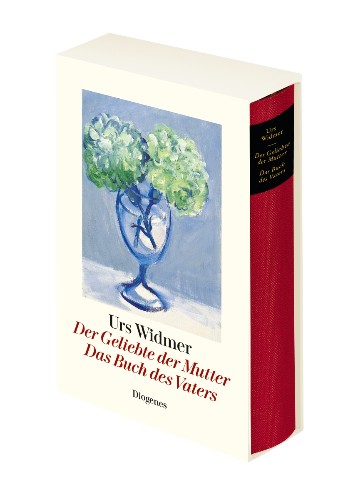
Der Geliebte der Mutter / Das Buch des Vaters
Im Warenkorb
Urs Widmer

My Mother's Lover / My Father's Book

The same family story told from two different, independent perspectives: Urs Widmer’s two hit novels, now in one volume.

My Mother’s Lover
Clara’s lifelong unrequited love for the famous conductor Edwin, mapped out by her son. A novel about music, money and power, and about reversing roles.

My Father’s Book
He loves friends, women, parties. Most of all, though, he loves books. The chronicle of a passionate life determined by a love of literature. And by his love for Clara Molinari, his wife.

The two novels also tell of the twentieth century’s great utopias, hopes and disappointments.

Further readings
  • Fact sheet PDF
Isabel Koellreuter

Isabel Koellreuter

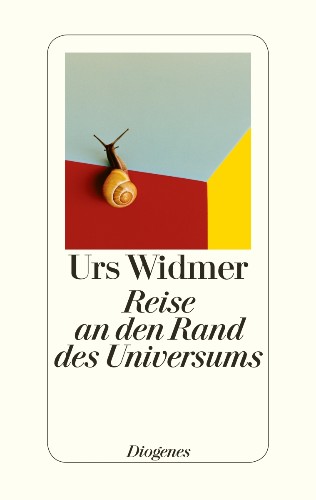
Reise an den Rand des Universums
Im Warenkorb
Urs Widmer

Journey to the Edge of the Universe

»First we dream of the future, then we live it, and in the end, once this lived future is in the past, we recount it to ourselves.«

This autobiography is special: it stops where others usually begin. Urs Widmer's years as a child, as a young man, as a student, as an editor. His family home, friends, his first loves, his wife May. Family history and family myths. School, teachers. Holidays, travel. Basel, Montpellier, Greece, Paris. The banal and the dramatic at a time when history was being written: World War II, the Cold War, the sixties. And, again and again, his parents, the ever-present shadows in his work. Even though these memories often deal with the tragic, their vitality and vividness are unsurpassable.

Further readings
  • Fact sheet PDF
  • Extract in German
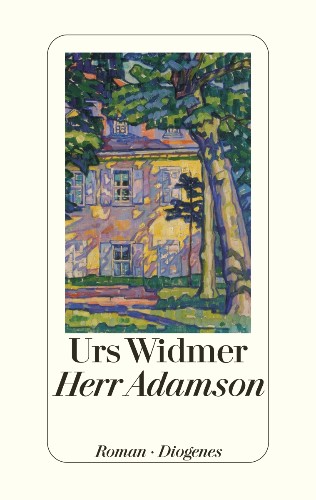
Herr Adamson
Im Warenkorb
Urs Widmer

Mr. Adamson

An anticipated farewell. Fears already lived through. The great obsession of humanity who cannot bring it under control even with rites and age-old myths. A life towards death, told with heart warming cheerfulness. It is Friday, 22 May 2032. One day after his ninety-fourth birthday, a man sits in a lush blooming garden – it is the paradise garden of his childhood – with a recorder beside him, and tapes his story with Mr. Adamson. He tells his story to us, but most of all to Annie, his grand daughter. And he is waiting – for the very same Mr. Adamson whom he hasn't seen since he was eight years old. It was a strange encounter. A glimpse into areas which are usually concealed from the living. A grandiose book whose vitality and love of life manages to banish what is the scandal of every life: death.

Further readings
  • Fact sheet PDF
Norman Ohler

Norman Ohler

Norman Ohler, born in 1970, is a freelance author and lives in Berlin. He has written several novels and screenplays and was awarded the ›Pfalz Literature Prize‹. His book Blitzed: Drugs in Nazi Germany was a New York Times bestseller and a Spiegel bestseller. His works have been published in more than 30 languages.

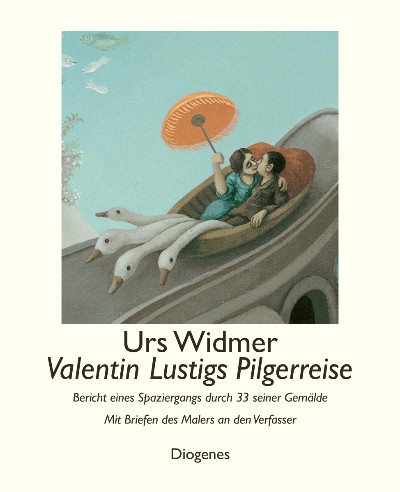
Valentin Lustigs Pilgerreise
Im Warenkorb
Urs Widmer, Valentin Lustig, Lustig, Valentin

Valentin Lustig's Pilgrimage

The story line is a »pilgrimage, which zigzags around an earth full of puzzles, often heavenly, sometimes hellish. Is it the way there? Is it the way back?« At first glance, Lustig's pictures seem poetic, uncanny and playful; but their pretty surface is »like a thin shell under which terrible things are found.« The pilgrimage deals with the end of the world, the great stillness, profound boundlessness and unrest. This is countered with humour, which both artists have: »Slowly I am getting older and wiser, now I know that the end of the world, like a spoiled diva, keeps us waiting; because you see, we are still here and Switzerland is, too.«

Further readings
  • Fact sheet PDF
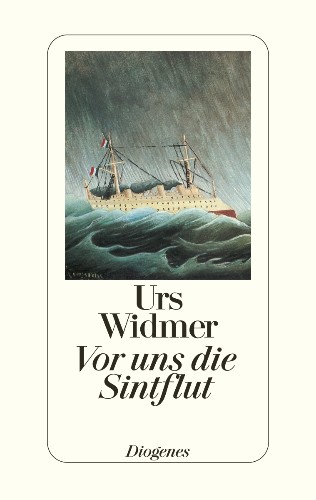
Vor uns die Sintflut
Im Warenkorb
Urs Widmer

Before us the Flood

›Vor uns die Sintflut‹ contains twenty-one ironical and enigmatic stories, modern fairy-tales and unobtrusive parables. At the approaching leap into the next millenium, Urs Widmer provides us with an urgent reminder that the world was once beautiful. The threshold of the second millenium is imminent, and the world is coming apart at the seams. Apocalyptic terror engenders strange fancies. Urs Widmer throws light on some contemporary phenomena: »Noah's Cult«, for example, which is enjoying increasing popularity and inspiring quite a few people to cultivate their own arks in the secrecy of their cellars. But the enemy's threat is not only water: extra-terrestrials experiment with our genes, and the hole in the ozone layer demands absurd survival strategies. And the computers have our future well under control. Man seems to be completely occupied with fleeing from himself, hunted, a refugee, a bizarre tourist or the inhabitant of an artificial paradise. The future? No time even for despair, but only Olympic laughter in the face of the gigantic stupidity of the human race? Orpheus, now speechless, begs for a few last francs in the guise of a confused old tramp…

Further readings
  • Fact sheet PDF
Solomonica de Winter

Solomonica de Winter

Solomonica de Winter was born in 1997 in Bloemendaal, the Netherlands. Raised bilingually, she grew up both there and in Los Angeles, California. She has lived in Israel, Italy, and the USA and graduated with a Masters Degree of Fine Arts in Fiction Writing at the Vermont College of Fine Arts. She currently resides in the Netherlands. Solomonica de Winter writes in English.

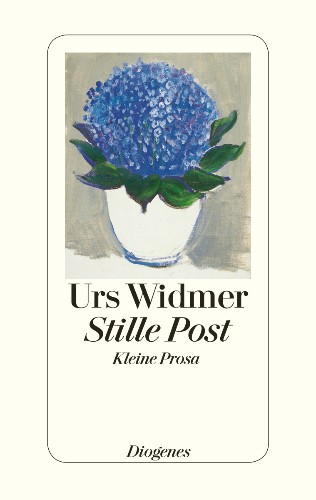
Stille Post
Im Warenkorb
Urs Widmer

Chinese Whispers

›Chinese Whispers‹ is the name of a children's game, played here with a literary text: It travels around the world and through six languages, and is compared with its original message at the end, with astonishing results. Ten prose pieces: A dream journey that is so suggestive you feel like you are there. A game played with creation myths. A first person narrator who voices the monstrous. An internal monologue between a man as his young and old self about the state of the world and his own personal stories. Legendary tales about gossipy old aunts and places where the author has been or wants to go to. About a century full of mortal agony. About encounters of longing at inopportune moments. And a book of nightmares about what people do to one another. Prose texts, poèmes en prose, poetic, mad, funny, dark, obsessive, yet always told with effortless ease by the inimitable voice of Urs Widmer.

Further readings
  • Fact sheet PDF
  • Extract in German
Das Buch des Vaters
Im Warenkorb
Urs Widmer

My Father's Book

On his twelfth birthday Karl receives a book of blank pages, which he proceeds to fill, day by day, throughout his life. But after his death the book disappears before his son, as tradition dictates, has had the chance to read it. So the son, as first-person narrator, retells the story: My Father's Book. This is the record of a rich existence, characterised by its love for life and passion for books. The fathers ability to inspire both himself and others is perhaps his most wonderful trait. Inwardly he lives in the world of Villon, Diderot and Stendhal whose work, along with that of many others, he translates while outwardly he feels himself drawn to of a group of young artists, all with distinct styles, but united in their burning antifascist beliefs. It comes as no surprise that he too, during a legendary carnival in 1936, becomes a communist. On his death in 1965, however, this allegiance is but a distant memory. My Father's Book is, inter alia, the story of the political aspirations and disappointments of the twentieth century. Of course, the book also tells the story of Clara, the woman he loves, the central figure in the novel My Mother's Lover. The same story, recounted from a startlingly new perspective.

Further readings
  • Fact sheet PDF
Daniel Faßbender

Daniel Faßbender

Daniel Faßbender used to be a sailor and dreamed of becoming a professional surfer. He earns his living as a duty editor for a large private TV channel. He studied comparative literature, politics and history. His debut novel The World’s Greatest Story of Falling was released in 2018 and longlisted for the ›Blogbuster Literature Prize‹. For Heaven’s Gate he was awarded a fellowship with the NRW Literary Office’s and Bonn Literature House’s one-to-one mentoring programme. He lives in Cologne, his native city.

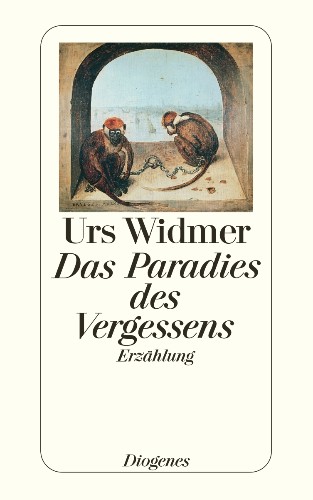
Das Paradies des Vergessens
Im Warenkorb
Urs Widmer

Paradise of Oblivion

In the novella ›The Paradie of Oblivion‹, Widmer is trying to square the circle: for how do you write a story that is about fading and disappearing memory? Indeed, although without memory no story can be told, the novella ambivalently (for the loss of our memory could well be a curse) seems to praise the fading of memory. Thus he who is devoid of memory is no longer haunted by the dreadful images of his past.

Further readings
  • Fact sheet PDF
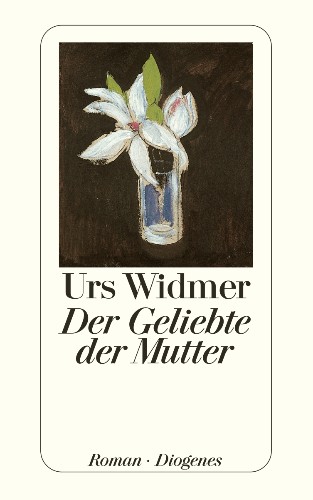
Der Geliebte der Mutter
Im Warenkorb
Urs Widmer

My Mother's Lover

At first glance, this tale couldn’t be more simple: a son narrates the love and life story of his mother and her one great love. Yet the impact of this short moment in which two people cross paths and then, at the end of an epoch, are catapulted into opposite spheres, couldn’t be more profound impact. While Edwin, initially an impoverished conductor, ascends into the highest circles of Zurich society, Clara’s family loses their fortune, and along with it their future. All Clara has left is music, and her memory of a desperate love.

Further readings
  • Fact sheet PDF
Patrick Süskind

Patrick Süskind

Patrick Süskind, born in Ambach on Lake Starnberg in 1949, studied medieval and modern history in Munich and Aix-en-Provence, making a living writing screenplays. His one-man play The Double Bass was published in 1984, his novel Perfume: The Story of a Murderer in 1985, the novella The Pigeon in 1987 and The Story of Mr Sommer with illustrations by Jean-Jacques Sempé in 1991.

Shakespeares Königsdramen
Im Warenkorb
Urs Widmer, Flora, Paul

Shakespeare’s King Plays

Those who believe that to read Shakespeare in anything but the original is nothing short of sacrilege have obviously never read Urs Widmers retelling of Shakespeares King plays! Widmer has transposed Shakespeares seven plays about betrayal, intrigue, murder and war at the English court into riveting, condensed prose an engaging introduction into a universe of hundreds of characters, but also pure pleasure for Shakespeare-lovers. Although Urs Widmers version remains true to the originals, he recounts the dramas as only he can with imagination and a modern touch, seen from a plethora of perspectives and told in a huge variety of voices, at times pure fairy tale, at times prose, but always captivating. All of this in Widmers inimitable style, as we know it from his successful novels ›A Devoted Life‹ and ›The Book of the Father‹. I imagined throughout that I was recounting events from earlier times, and not that I was describing the theatrical inventions of a writer named Shakespeare. All in all, I have attempted to bring together two ambitions: to write stories at once good and which, irrespective of their literary qualities, can be read as a summary of the original (Urs Widmer in his Introduction).

Further readings
  • Fact sheet PDF
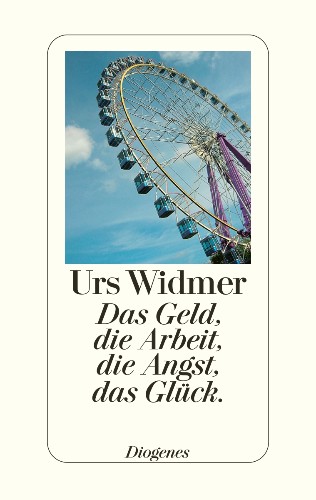
Das Geld, die Arbeit, die Angst, das Glück.
Im Warenkorb
Urs Widmer

Money, Work, Fear, Happiness

Its title is its programme. Widmer's columns and essays are about matters close to our hearts. What role does money play in our lives? How does work influence our self-definition? What are we afraid of? What makes us happy? The subjects of the texts range from everyday life to social problems. They describe the dissolution of the collective memory, the hysteria of our society, the catastrophic year 2001. They deal with immortality, with the first rapper Homer, and with the desire to think, just for a moment, with someone else's brain. It contains brilliant essays on ambivalent Nabokov heroes and Joseph Conrad's ›Heart of Darkness‹. And an outline of Helvetian history on the example of Gottfried Keller's ›Fähnlein der sieben Aufrechten‹.

Further readings
  • Fact sheet PDF
Felizitas von Schönborn

Felizitas von Schönborn

Felizitas von Schönborn studied theology, philosophy and history. She is accredited as a correspondent by the UN and has to date recorded over seventy meetings with fascinating contemporary figures in her ›holistic kaleidoscope of conversations‹.
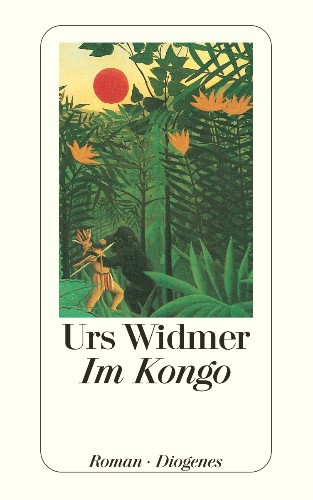
Im Kongo
Im Warenkorb
Urs Widmer

In the Congo

Kuno, a male nurse in an old people's home, has a new inmate: his father. In the isolation of the home, they finally start talking. Kuno had always regarded his father as boring, a man without a history and without a destiny – until one day he realises that he had once risked his life in the war. His ageing father had a destiny, and what a destiny! This realisation changes Kuno's life, and he embarks on a journey into his own psyche which takes him to the depths of the Congo. Longings awaken and dreams come true – rays of light in the darkness, meetings with kings, seductive women and the songs of the jungle: the alluring faraway places which he once regarded as the heart of darkness become an adventurous, exciting scene of lunacy, wildness and a test of his own inner strength.

Further readings
  • Fact sheet PDF
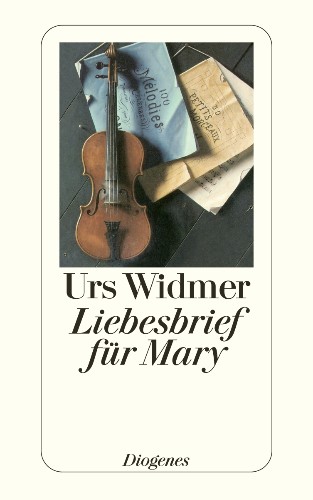
Liebesbrief für Mary
Im Warenkorb
Urs Widmer

Love Letter for Mary

Born in Ireland and living in Zurich, Mary is a beanpole with translucent skin, some freckles, blue eyes and blond hair. She has two admirers in Zurich: a writer and first-person narrator and his friend Helmut, letter writer and author as well. Yet she ends up with a service station attendant in distant Australia. It is here that she receives Helmut's ›Love Letter to Mary‹.

Further readings
  • Fact sheet PDF
Monika Czernin

Monika Czernin

Monika Czernin, born in Klagenfurt in 1965, is a renowned international filmmaker and author. Her books about central figures and watershed moments in European history are best- sellers in Germany and Austria.
Aside from Picasso’s Hairdresser, Monika Czernin and Melissa Müller have worked together on several documentary films.

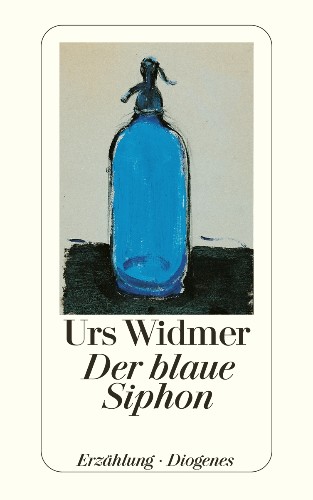
Der blaue Siphon
Im Warenkorb
Urs Widmer

The Blue Siphon

Driven out of his home, our hero wanders helplessly through the streets, ends up at the railway station, gets into a train going to Basel, his home town – and finds himself back in the past, in his youth. Nothing has changed at his parent's home – even the soda siphon by the side of his father's bottles of spirits. But his parents do not recognise the stranger who arrived on their doorstep, and they miss their small son. A journey in time through several screens begins.

Further readings
  • Fact sheet PDF

  • Contact
  • Reprint Inquiries
  • Newsletter
  • Blog
  • Facebook
  • Twitter
  • YouTube
  • Instagram
  • Mastodon
  • Leser:innen
  • Presse
  • Buchhandel
  • Foreign Rights
  • Film Rights
  • Theaterverlag
  • Privacy Policy
  • Terms of Use
  • Imprint
↑